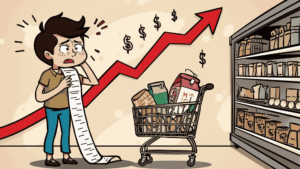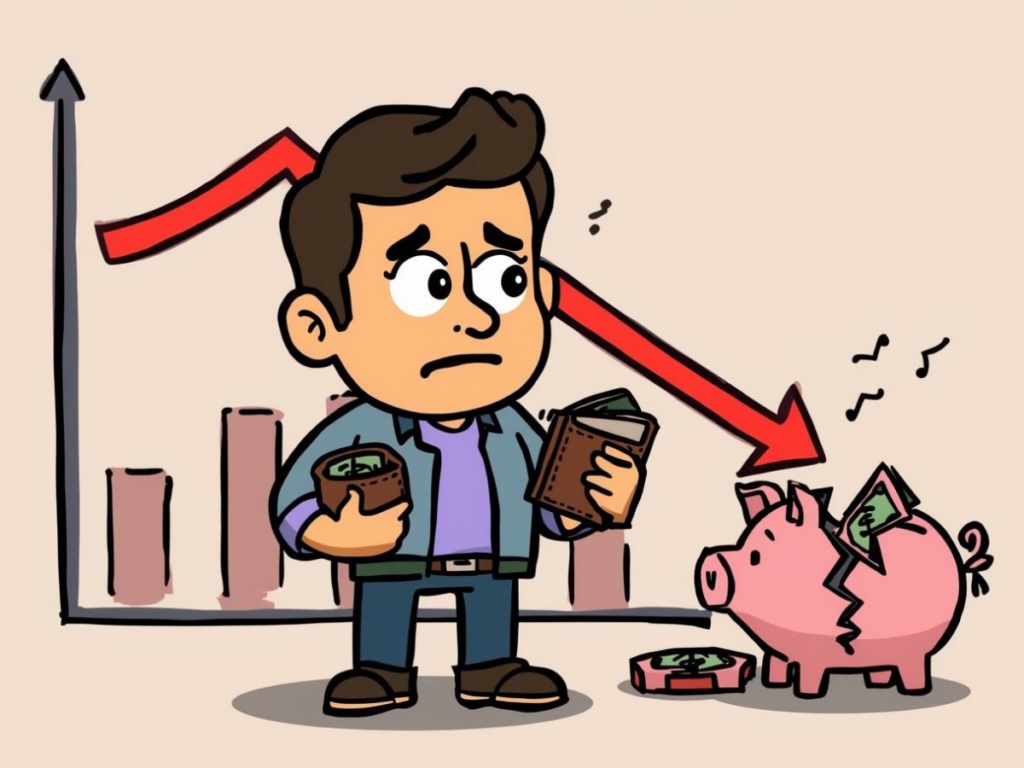
Most people first hear the word “recession” on the news, often accompanied by alarming headlines and falling stock prices. By the time economists officially confirm one, millions of workers have already felt it — in a layoff notice, a frozen raise, or a business that quietly closed its doors. The word carries weight, yet the concept behind it remains surprisingly misunderstood.
This article provides a full coverage of the recession definition. You will learn what a recession actually is, how it is measured, what causes one to begin, and how it ripples through jobs, businesses, and everyday financial life. Along the way, you will find connections to related topics — including interest rates, the 1929 market crash, and the dot-com bubble — each of which played a central role in some of history’s most significant downturns.
Watch the Money Nudge YouTube video about the Definition of Recession:
Prefer to watch instead of read?
Our YouTube Channel was made for you! Money Talk made Even Simpler.
Table of Contents
Recession Definition: What the Term Actually Means
The recession definition that is used widely by economists is: a significant, widespread, and sustained decline in overall economic activity. That single sentence contains three important words worth unpacking. Significant means the decline is meaningful, not a minor blip. Widespread means it affects multiple sectors of the economy, not just one industry. Sustained means it persists over time rather than reversing after a few weeks.
A range of indicators measures economic activity, including output, employment rates, consumer spending, and business investment. When the majority of those indicators turn negative and stay that way, the economy is understood to be in a recession. In simple terms, a recession is a period of economic contraction rather than growth. Things that were moving forward begin moving backward.
A widely cited rule of thumb defines a recession as two consecutive quarters of negative GDP growth. GDP stands for Gross Domestic Product, which measures the total value of all goods and services a country produces within a given period. Two consecutive quarters mean roughly six months of economic decline. At the same time, this rule is popular — and useful as a starting point — most economists consider it incomplete on its own. Official determinations of a recession typically rely on a broader set of data.
Do You Think The DOT-COM bubble was a recession? You Might be Wrong!
Find out if the DOT-COM bubble was a recession or not.
Read Article →How Economists Officially Identify a Recession
In the United States, the official authority on recession dating is the National Bureau of Economic Research, commonly called the NBER. The NBER does not rely solely on the two-quarter rule for its GDP estimates. Instead, it examines a combination of monthly economic indicators, including employment levels, personal income, industrial production, retail sales, and wholesale trade. A recession is declared when several of these measures show a consistent and broad decline over a meaningful period of time.
This process matters for a practical reason: identifying a recession happens after it has already started. Economic data is collected, revised, and analyzed over months. By the time the NBER officially announces a recession, businesses and workers may have been experiencing its effects for some time. This delay is one reason the recession definition can feel abstract — the label arrives after the reality has already taken hold.
Outside the United States, other countries and international organizations use slightly different methods. The European Union, for example, does rely more heavily on the two-consecutive-quarters rule. The underlying principle, however, remains the same across most frameworks: a recession is measured by sustained, broad economic contraction across multiple parts of the economy.
Recession Meaning in Everyday Life
The recession definition becomes clearest not in economic textbooks but in the daily experiences of ordinary people. During a recession, job openings become harder to find. Companies that were hiring six months earlier begin posting fewer listings, extending hiring timelines, or quietly pulling offers already made.
Employers that avoid layoffs often introduce hiring freezes, reduced hours, or voluntary exit programs instead.
Workers who remain employed are not necessarily insulated. Wage growth tends to slow during recessions, as businesses prioritize cost control over compensation increases. Bonuses shrink or disappear. Career advancement, which feels natural during a growing economy, requires more effort and patience during a contraction.
Consumer spending shifts as well. Households become more cautious about large purchases, travel, dining out, and other discretionary spending. This caution is often rational — people save more when they feel uncertain about income stability. But that caution compounds the problem. When millions of households spend less at the same time, the businesses that rely on that spending earn less revenue, which leads to further cost-cutting, fewer jobs, and even less spending. Economists call this a deflationary spiral, and it is one of the most challenging dynamics a recession can produce.
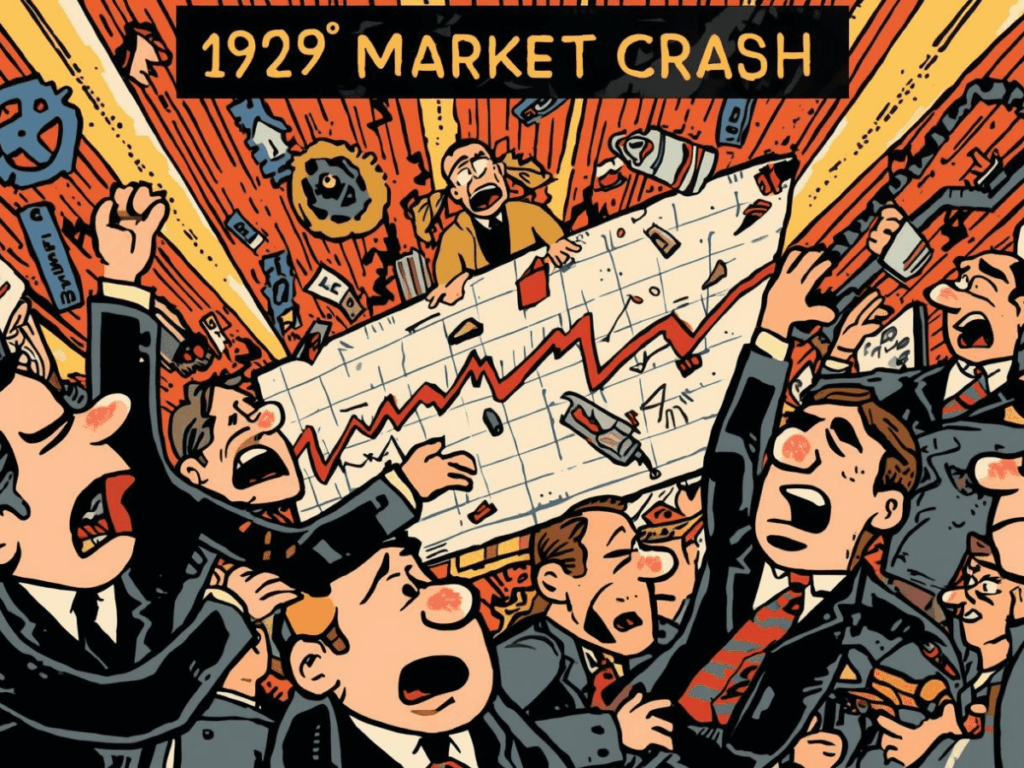
Have you ever heard about the 1929 Market Crash?
Learn if the 1929 market crash was a recession or not.
Read Article →The Business Cycle: Where Recessions Fit In
To fully understand the recession definition, it helps to understand the broader pattern it belongs to. Economies do not grow at a constant rate indefinitely. They move in cycles, expanding and contracting over time.
This pattern is the business cycle, with 4 recognizable phases.
The first phase is expansion. During expansion, economic output grows, employment rises, consumer confidence is strong, and businesses invest in new capacity. The first phase is the one people associate with a healthy economy. The second phase is the peak, which is the high point of the cycle — the moment just before growth begins to slow. The third phase is the recession, marked by falling output, rising unemployment, and reduced investment. The fourth phase is the trough, the lowest point of the cycle, after which recovery begins and a new period of expansion starts.
Recessions are a normal feature of this cycle, not an anomaly. They represent a corrective period in which excesses built up during expansion — overvalued assets, unsustainable debt, or misallocated resources — begin to unwind. Understanding it is all part of a cycle does not make it painless, but it does put it in context. A recession is a phase within a recurring cycle, not a permanent condition.
What Causes a Recession to Begin
No two recessions share the same cause, but several triggers recur across economic history. Understanding these causes is part of understanding the full recession meaning, because recessions rarely emerge without warning signs.
Interest rate increases are one of the most common contributing factors. When central banks raise interest rates to control inflation, borrowing becomes more expensive. Consumers take out fewer loans to buy homes, cars, and appliances. Businesses borrow less to expand operations or hire staff. Spending slows, and if rates rise too aggressively or too quickly, the economy can contract. Interest rates are a core tool of monetary policy, and their relationship with recessions is worth exploring in depth — you can read a dedicated article on how interest rates work and how they shape economic growth here on Money Nudge.
The interest rate is more important than you think!
Find out Why.
Read Article →Asset bubbles bursting are another common cause. When the value of an asset — whether homes, technology stocks, or commodities — rises far beyond what underlying fundamentals can justify, a bubble forms. Investors pile in, prices climb further, and eventually the gap between price and reality becomes too wide to sustain. When the correction comes, it can be severe. Two of the most studied examples are the 1929 market crash, which preceded the Great Depression, and the dot-com bubble of the late 1990s and early 2000s.
The 1929 crash wiped out enormous amounts of wealth across a matter of days and helped trigger a decade-long depression — a history covered in dedicated detail in our article on the 1929 crash. The dot-com bubble burst led to a mild but real recession in 2001 as technology companies collapsed and corporate investment contracted sharply. That story is explored fully in our dot-com bubble article.
External shocks can also trigger recessions by disrupting supply chains, driving up energy costs, or undermining global trade. Oil price shocks in the 1970s contributed to recessions in multiple countries by raising production costs across entire industries at once.
Loss of confidence deserves special attention because it is both a cause and an amplifier of recessions. When consumers and businesses expect difficult times ahead, they respond by spending and investing less. That reduced activity weakens demand, which can validate the very fears that sparked the pullback. In this way, expectation alone can accelerate an economic downturn even before underlying data confirms one.
You Are Not Gonna Believe Why The DOT-COM bubble burst…
Read Article →How Recessions Affect Employment
Employment is where the recession definition becomes most personal for most people. When businesses earn less revenue, controlling labor costs becomes a priority. The most direct response is layoffs, though companies often move through a sequence of less disruptive actions first. Reducing overtime, stopping the renewal of temporary contracts, leaving positions unfilled, and deferring raises are among the less disruptive actions. Only after these steps fail to close the gap do large-scale workforce reductions typically begin.
The effects are uneven across industries and workers. Sectors tied to discretionary spending — hospitality, retail, entertainment, travel, and real estate — tend to see the earliest and sharpest declines. Workers in these industries often face the highest job-loss rates during downturns. Industries providing essential services, such as healthcare, utilities, and public services, tend to be more resilient, though not entirely immune.
For workers who do lose their jobs, the consequences extend well beyond the immediate loss of income. Extended periods of unemployment erode professional skills, shrink professional networks, and create gaps in employment history that make re-entry into the workforce more difficult. Younger workers entering the labor market during a recession often earn less than comparable workers who entered during expansionary periods, and some research suggests those earnings gaps persist for years after the recession ends.
How Recessions Affect Businesses
Businesses experience recessions differently depending on their size, industry, and financial position at the time of the downturn. Small businesses face particular vulnerability because they typically carry less cash in reserve and have fewer options for raising emergency capital. A sustained drop in revenue can exhaust those reserves within weeks or months. A large share of small business closures during recessions result not from the downturn alone but from the combination of a revenue drop and an absence of a financial buffer to survive it.
Larger corporations are generally more resilient, but they are not invulnerable. During recessions, major companies typically reduce capital expenditures, cancel planned expansions, renegotiate supplier contracts, and reduce headcount through layoffs and early retirement packages. Share buyback programs are often suspended. Dividends may be cut—the priority shifts from growth to survival and cash preservation.
Supply chains contract as well. When a large company reduces its purchases, the businesses supplying that company — many of them small — feel the pressure immediately. A recession that begins in consumer-facing industries often works its way backward through the supply chain within one to two quarters, spreading the impact well beyond the sector where it originated.
Recessions and Financial Markets
Financial markets often begin reacting to a recession before economic data confirms it. Stock prices often decline as investors anticipate reduced corporate earnings, lower dividends, and reduced investment activity. Market declines can be sharp and rapid as investors simultaneously reassess valuations across entire sectors. The speed of market movements contrasts with the slower pace of real economic indicators, which is why markets sometimes fall into what appears to be panic before conditions on the ground have significantly deteriorated.
Bond markets tend to move in a different direction during recessions. Investors seeking safety often shift capital from equities to government bonds, which they consider lower risk. This increased demand pushes bond prices up and bond yields down. Central banks may also lower interest rates during a recession to stimulate borrowing and spending, which further affects bond yields and shapes the cost of credit across the economy.
It is important to distinguish between a market decline and a recession, even when the two coincide. Markets can fall sharply without a recession following. Recessions can also begin without a dramatic stock market decline. The recession definition is rooted in the real economy — output, employment, income, and spending — not in daily market movements.
A Brief Look at History: Recessions Worth Knowing
Three historical episodes offer especially clear illustrations of what the recession definition looks like in practice, and each connects to a broader story explored elsewhere on Money Nudge.
The 1929 market crash and the Great Depression that followed remain the most extreme economic contractions in modern history. The crash wiped out vast amounts of wealth almost immediately, and the bank failures and policy mistakes that followed turned a severe recession into a decade-long depression. Understanding what went wrong in 1929 still shapes how policymakers respond to crises today — and that story is covered in full in our article on the 1929 crash.
The dot-com bubble burst of 2000 to 2001 produced a recession driven largely by the collapse of technology company valuations that had risen to extraordinary levels throughout the late 1990s.
Companies with valuations in the billions had little or no revenue. When investor confidence collapsed, so did those valuations — and with them, a significant portion of corporate investment and employment in the technology sector. The 2001 recession was comparatively short, but its causes illustrate clearly how speculative bubbles can destabilize broader economic activity. A full account of that period is available in our dot-com bubble article.
The 2008 financial crisis produced what economists often call the Great Recession. It began in the housing market, where years of loose lending standards had created a bubble in home prices. When that bubble burst, the damage spread through a financial system deeply interconnected with mortgage-backed securities. The result was a global recession of significant depth and duration, with unemployment rising sharply and economic output contracting across multiple major economies simultaneously.
The Role of Government and Central Banks During Recessions
Recessions do not run their course uninterrupted. Governments and central banks typically respond with policy tools designed to limit the damage and accelerate recovery. Understanding these responses is part of grasping the full recession meaning — because a recession’s severity and length are shaped not just by what caused it, but by how aggressively and effectively policymakers respond.
Video: The Central bank is capable of many things…
Prefer to watch instead of read?
Our YouTube Channel was made for you! Money Talk made Even Simpler.
Central banks typically respond to recessions by lowering interest rates. Lower rates reduce the cost of borrowing for households and businesses, which stimulates spending and investment. When interest rates fall close to zero, and further cuts become impractical, central banks sometimes use alternative tools, such as quantitative easing, in which they purchase large quantities of government securities to increase the money supply and support lending.
Governments can respond through fiscal policy, which means adjusting government spending and taxation. Increasing public spending — on infrastructure, public services, or direct payments to households — can inject demand into an economy where private spending has slowed. Tax cuts or rebates can give households and businesses additional resources to spend or invest. The effectiveness and appropriateness of these tools remain a subject of ongoing debate among economists, but their use during recessions is consistent across most modern economies.
How Long Do Recessions Last?
One of the most common practical questions surrounding the recession definition is: how long does one last? The honest answer is that it varies considerably. Some recessions are short and mild, lasting only a few quarters before recovery begins. The 2001 recession lasted eight months in the United States. Others are significantly longer — the recession associated with the 2008 financial crisis lasted approximately 18 months in the United States, and its effects on employment and household wealth persisted for years beyond that.
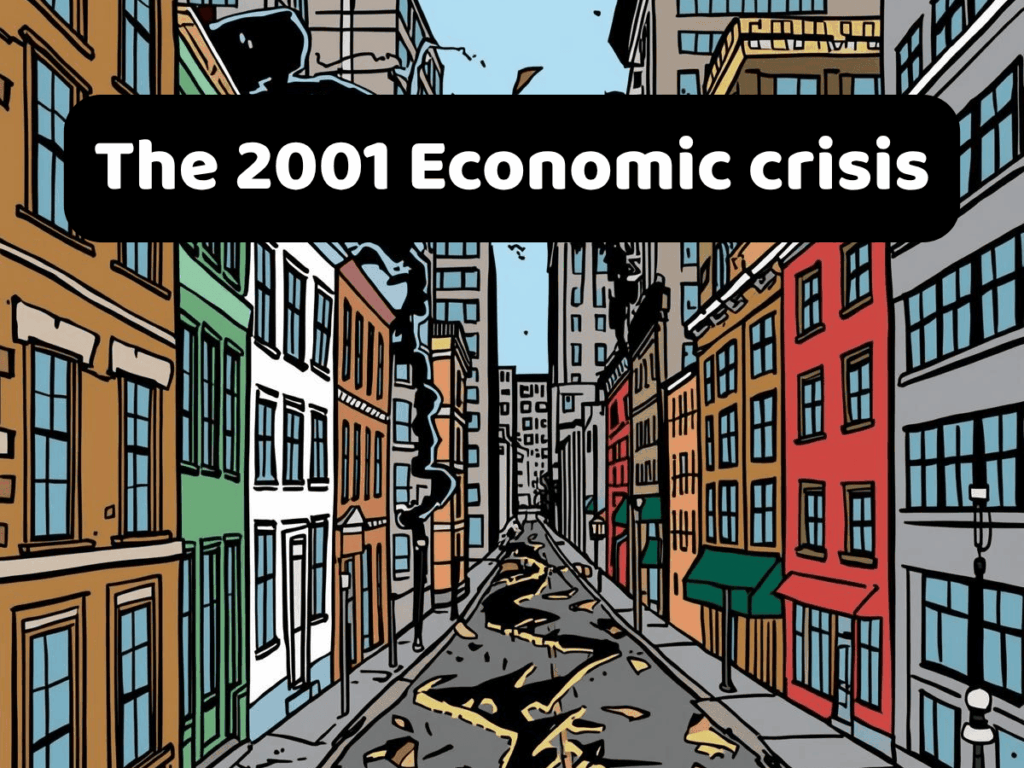
There is one thing about the 2001 Economic Crisis that changed EVERYTHING…
Find out what it was reading the article.
Read Article →The length of a recession depends on several interacting factors: the severity of the underlying cause, the speed of financial system stabilization, the aggressiveness of policymakers’ responses, and the speed of recovery in consumer and business confidence. Confidence, in particular, plays a significant role in the pace of recovery. An economy can have low interest rates and ample credit, but if businesses and households are unwilling to borrow and spend, those tools have limited immediate effect.
Recovery from a recession is also rarely uniform across all groups. Industries that contracted sharply may take longer to rebuild. Workers who lost jobs in shrinking sectors may need to retrain for roles in different fields. Regional economies tied to specific industries may recover more slowly than national averages suggest. The recession definition describes the contraction phase, but the recovery phase is complex in its own right.
Recession vs. Depression: Understanding the Difference
A natural companion question to the recession definition is: how does a recession differ from a depression? The distinction matters because the two terms are not interchangeable, even though they both describe periods of economic decline.
A significant characteristic of a recession is the decline in economic activity. Economic output falls, unemployment rises, and recovery typically follows within a period of months to a few years. A depression, by contrast, involves a far deeper and more prolonged contraction. The defining features of a depression include very high unemployment sustained over multiple years, sharp and lasting declines in output, widespread business failures, and severe disruptions to the financial system.
The Great Depression of the 1930s remains the clearest example of a depression in modern economic history. By comparison, most recessions — including relatively severe ones like the 2008 recession — do not approach the scale or duration of a depression. One informal distinction sometimes used is that a recession is when your neighbor loses their job, and a depression is when you lose yours. That framing is imprecise, but it captures something real about the difference in scale and reach between the two.
Key Terms Related to the Recession Definition
Several terms frequently appear alongside the recession definition and are worth knowing before moving on to more advanced financial topics.
GDP (Gross Domestic Product): The total monetary value of all goods and services produced by a country within a specific period. Declining GDP over multiple periods is one of the primary signals of a recession.
Business Cycle: The recurring pattern of expansion, peak, recession, and trough that economies move through over time. Recessions are the contraction phase of this cycle.
Unemployment Rate: The percentage of the labor force that is actively seeking work but not currently employed. The unemployment rate typically rises during recessions and is one of the key indicators that economists monitor closely.
Monetary Policy: Actions taken by a central bank — such as adjusting interest rates or the money supply — to influence economic conditions. Central banks use monetary policy as a primary tool for responding to recessions.
Fiscal Policy: Government decisions about spending and taxation are used to influence the economy. During recessions, governments often increase spending or reduce taxes to stimulate demand.
Bear Market: A period during which financial markets decline significantly, typically defined as a drop of 20 percent or more from a recent peak. Bear markets often accompany recessions, but can occur independently.
Inflation: The rate at which the general price level of goods and services rises over time, reducing purchasing power. High inflation often precedes recessions, particularly when central banks raise interest rates sharply to bring it under control.
Why Understanding the Recession Definition Matters for Personal Finance
Financial literacy begins with understanding the economic conditions you live in. The recession definition is not abstract economic theory — it describes a set of conditions that directly affects your income, job security, savings, and long-term financial plans. People who understand what a recession is and how it unfolds tend to make calmer, more deliberate financial decisions when one arrives.
Understanding that recessions are a normal part of the economic cycle — not rare, catastrophic events — helps reduce the instinct toward panic. Investors who understand this principle are less likely to make large reactive decisions during a market downturn, which is historically one of the most costly financial mistakes a person can make. Workers who understand this principle are more likely to maintain emergency savings during good times, knowing that slower periods are part of a recurring pattern rather than a sign that something has gone permanently wrong.
Being prepared does not mean recessions are easy to navigate. They impose real hardship on real people, and the difficulty varies for everyone. But awareness of what is happening and why it is happening lays a foundation for steady, informed decision-making — a meaningful advantage in any economic environment.
Final Thoughts on Recession Definition and Recession Meaning
A recession is a sustained, widespread decline in economic activity — measured through output, employment, income, and spending. The recession definition is precise enough to be useful and broad enough to capture a range of historical experiences, from mild eight-month contractions to prolonged crises like those that followed 1929 and 2008.
The recession’s effects in everyday life are evident in hiring slowdowns, cautious consumers, and businesses focused on survival rather than growth. It is felt unevenly across industries and workers, but it touches the broader economy in ways that are difficult to avoid entirely. Understanding both the definition and the meaning gives you a clearer picture of the economic world you participate in — and a better foundation for managing your finances within it.
Recessions end. Economies recover. The business cycle continues. Knowing that is not a reason for complacency, but it is a reason for steadiness.
Watch It Instead
The Money Nudge — YouTube Channel
Prefer watching over reading? Every topic on this blog also comes to life as an animated video on our YouTube channel — where we make money talk even more simply.
Visit Our Channel