
The dot-com bubble is one of the most talked-about financial events in modern economic history. It represents a period of intense optimism, rapid technological change, massive stock market speculation, and ultimately, a dramatic market collapse. Even decades later, people still ask the same question: Was the dot-com bubble actually an economic recession, or was it something different?
To answer that question properly, we need to understand what the dot-com bubble was, why it formed, how it collapsed, and how economists define a recession. Only then can we determine whether the dot-com bubble qualifies as an economic recession—or as a market crash that spilled over into the broader economy. This article explains the dot-com bubble in simple terms and clarifies why it is often confused with a recession, even though the reality is more nuanced.
Watch the Money Nudge YouTube Video about the Dot-Com Bubble:
Prefer to watch instead of read?
Subscribe to The Money Nudge on YouTube for plain-English videos on money, investing, and economic topics.
Table of Contents
What Was the Dot-Com Bubble?
The dot-com bubble refers to the period in the late 1990s when internet-based companies—often called “dot-coms”—experienced explosive stock price growth. Investors believed the internet would fundamentally reshape business, communication, shopping, and society itself. That belief wasn’t wrong—but the expectations attached to it were wildly unrealistic.
During the dot-com bubble, companies with small or even no revenue were valued at billions of dollars simply because they had a website, a catchy name, and a promise of future growth. Traditional valuation metrics like profits, cash flow, and balance sheets were largely ignored. Instead, investors focused on ideas such as first-mover advantage, rapid user growth over profitability, and capturing market share at all costs. The mindset was simple: grow fast now, and profits would come later.
This shift in thinking created a dangerous disconnect between reality and valuation. Investors were no longer asking, “Is this company profitable?” but rather, “How big could this company become?” That subtle change fueled massive speculation. Venture capital firms poured money into startups, and many of these companies rushed to go public through IPOs, often doubling or tripling in value on their first day of trading.
A key driver of the bubble was accessibility. For the first time, everyday investors could easily trade stocks online, and many jumped into the market hoping to capitalize on the rapid rise of internet companies. Media coverage and analyst hype only added fuel to the fire, reinforcing the belief that the internet economy was unstoppable.
To understand how extreme this became, imagine a company that sells pet food online but loses money on every sale. Instead of being seen as a weak business, investors justified its losses by arguing it would dominate the market in the future. As long as growth continued, the lack of profits was overlooked.
This environment created a feedback loop: rising stock prices attracted more investors, which pushed prices even higher. However, because these valuations lacked real financial performance support, the entire system became fragile. The moment confidence began to fade, the bubble was set to burst.
Why the Dot-Com Bubble Formed
The bubble didn’t appear out of nowhere. It was the result of several forces coming together simultaneously.
First, the internet was genuinely revolutionary. Email, websites, online shopping, and digital advertising were brand-new concepts. Investors correctly believed the internet would change the economy—but they struggled to identify which companies would survive in the long term. Because there was no clear playbook, many assumed that simply being early in the space guaranteed success. This led to a “land grab” mentality, in which companies focused on fast growth rather than on building sustainable business models. The logic was that whoever captured users first would dominate later, even if they were losing money in the process.
Second, capital was cheap and abundant. Interest rates were relatively low, making borrowing easier and encouraging risk-taking. Venture capital poured into startups at an unprecedented pace. Investors were willing to fund almost any company with an internet-related idea, often without demanding a clear path to profitability. Startups raised millions—or even hundreds of millions—of dollars based on projections rather than proven performance. This easy access to money removed discipline from the market, allowing weak business models to survive longer than they otherwise would have.
Another important factor was the rapid rise of initial public offerings (IPOs). Many internet companies went public very early in their lifecycle, sometimes just a few years after being founded. Once listed, their stock prices often surged dramatically on the first day of trading, reinforcing the idea that investing in tech startups was a guaranteed way to make money. This attracted even more companies to go public, further fueling the cycle.
Third, speculation fed on itself. As more investors made money buying internet stocks, the fear of missing out pushed even more people into the market. Individual investors, many of whom had little experience, began trading frequently, often chasing the latest “hot” stock—stories of quick profits spread rapidly, creating the impression that the market would keep rising.
Media coverage and analyst enthusiasm also played a major role. Financial news outlets constantly highlighted success stories, while analysts issued optimistic projections about future growth. Negative signals—such as companies burning cash or failing to generate profits—were often dismissed as temporary setbacks rather than warning signs.
At the same time, traditional valuation frameworks were increasingly ignored. Price-to-earnings ratios became meaningless for companies with no earnings, so new metrics such as “price per user” or “website traffic growth” were used instead. While these metrics captured potential, they often failed to reflect whether a business could ever become profitable.
This feedback loop is a classic bubble dynamic—and it became one of the largest in history.
How Big Was the Dot-Com Bubble?
At its peak in early 2000, the internet and technology stocks dominated the market. The NASDAQ Composite, which is majority weighted toward technology companies, more than doubled in value between 1995 and 2000.
Many companies that defined the dot-com bubble had no sustainable business model. Some spent millions on advertising before earning a single dollar in revenue. Others planned to “figure out profits later.” When reality finally caught up with expectations, the collapse was swift and brutal.
The Bubble Burst
The bubble burst in March 2000. Investors began to notice that many internet companies would never become profitable. As confidence faded, stock prices fell—and once the selling started, it accelerated quickly. What triggered this shift was not a single event, but a gradual realization. Some high-profile companies began reporting disappointing earnings, revealing massive losses and weak business fundamentals. Others failed to meet even modest growth expectations. As these reports accumulated, investors started to question the entire narrative that had driven the boom. The belief that “profits can come later” suddenly became much less convincing.
At the same time, the market had become extremely fragile. Stock prices were built on expectations rather than solid financial performance, so when expectations changed, valuations had little support. Even a small loss of confidence created a domino effect. Investors who had seen their portfolios grow rapidly were now eager to protect their gains, leading to widespread selling.
Over the next two years, the decline was severe and relentless. One of the most important Indexes, the NASDAQ Composite, lost nearly 80% of its value, falling from its peak in early 2000 to its low in 2002. This wasn’t just a normal market correction—it was a dramatic collapse that erased years of gains.
Thousands of technology companies went bankrupt, especially those that relied heavily on continuous funding to survive. Without access to new capital, many startups ran out of cash. Businesses that had expanded aggressively during the boom were forced to shut down, often leaving employees without jobs and investors with nothing.
Trillions of dollars in market value disappeared as stock prices across the technology sector—and eventually the broader market—plummeted. Companies that were once valued in the billions saw their worth shrink to a fraction of that, sometimes in a matter of months.
The impact extended far beyond Wall Street. Many individuals had invested heavily in technology stocks, either directly or through retirement accounts. As prices collapsed, savings that had taken years to build were significantly reduced. Venture capital firms also suffered heavy losses, leading to a sharp pullback in funding for new startups.
However, a stock market crash alone does not automatically mean the economy is in a recession. This distinction is crucial. While the dot-com crash caused significant financial damage and slowed economic activity, its effects were more concentrated in the technology sector compared to broader economic downturns. Understanding this difference helps explain why financial markets can collapse faster—and sometimes more dramatically—than the overall economy.
What Is an Economic Recession?
Before deciding whether it was an economic recession, we need clarity on what a recession actually is.
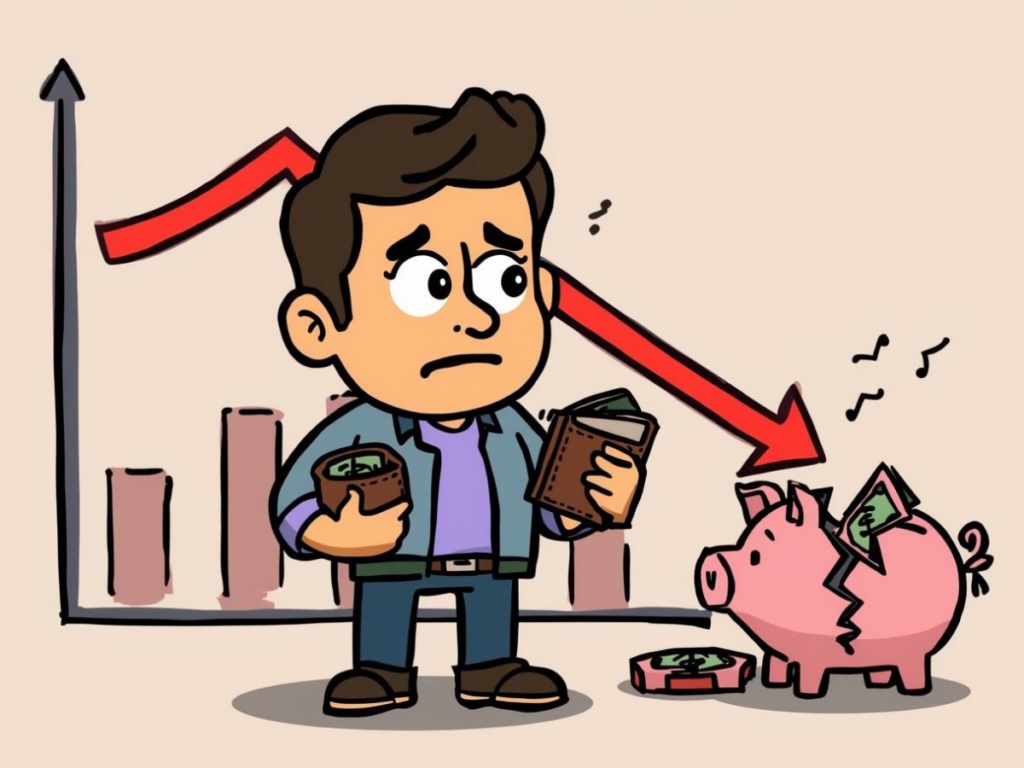
Before You Go, Make Sure You Understand The Real Definition Of Recession
Read the article below and find out.
Read Article →In simple terms, a recession is a sustained decline in overall economic activity. It usually involves:
- Falling GDP
- Rising unemployment
- Lower consumer spending
- Reduced business investment
In the United States, recessions are officially dated by the National Bureau of Economic Research, which looks at a broad range of economic indicators rather than just the stock market. This is where the dot-com bubble becomes interesting.
Was the Dot-Com Bubble an Economic Recession?
The short answer is: the bubble itself was not a recession, but it led to one. The bursting of the bubble triggered the 2001 recession, but the bubble and the recession are distinct events. It was primarily a financial market collapse, concentrated in technology stocks and investment capital. The recession that followed was broader, affecting employment, business spending, and economic growth.
To understand the difference, it helps to think of the stock market as a forward-looking system. Stock prices reflect expectations about the future, not just current conditions. During the dot-com bubble, those expectations became overly optimistic. When reality failed to match those expectations, the market corrected sharply. However, the real economy—jobs, wages, and consumer spending—tends to move more slowly. That’s why the crash happened quickly, while the recession developed more gradually.
In fact, the early stages of the market crash caused relatively limited damage to everyday consumers. Many people did not feel immediate economic pain until later, when layoffs spread beyond tech and business investment slowed. At first, the impact was mostly contained within investors, startups, and technology companies. But as those companies cut costs, canceled expansion plans, and reduced hiring, the effects began to ripple outward.
One of the key transmission channels was business investment. During the bubble, companies had spent heavily on technology infrastructure, software, and expansion projects. When the crash occurred, spending dropped sharply. Businesses became more cautious, delaying or canceling investments. This slowdown reduced demand across multiple industries, not just technology, and contributed to a broader economic slowdown.
Employment was another major factor. As startups failed and larger tech companies restructured, layoffs increased. Initially, these job losses were concentrated in the tech sector. Still, over time, they spread to related industries such as telecommunications, advertising, and manufacturing. Rising unemployment reduced household income and consumer confidence, leading people to spend less.
Consumer psychology also played an important role. Even for individuals who did not directly invest in the stock market, the constant news of declining markets and failing companies created uncertainty. When people feel uncertain about the future, they tend to save more and spend less. This behavioral shift can slow down the entire economy.
It’s also important to recognize that the 2001 recession was relatively mild compared to other economic downturns. While growth slowed and unemployment rose, the financial system itself remained stable. Unlike more severe crises, such as the 2008 Financial Crisis, the dot-com collapse did not trigger widespread failures in banks or credit markets.
This distinction highlights an important lesson: financial bubbles can burst without immediately collapsing the entire economy—but they often plant the seeds for a downturn that follows.
The 2001 Recession: A Spillover Effect
The official recession associated with it lasted from March 2001 to November 2001. Compared to other recessions, it was relatively mild. Unemployment rose, but not dramatically. GDP growth slowed, but did not collapse. Consumer spending remained fairly resilient. This is one of the reasons economists debate whether the dot-com downturn “felt” like a recession for most households.
The recession was real—but it was shallow, uneven, and heavily concentrated in specific sectors.
Why Is It Often Confused with a Recession
The dot-com bubble is often labeled a recession because:
- Stock market losses were massive
- Media coverage was intense
- Tech layoffs were highly visible
- Investor wealth declined sharply
However, stock market crashes and recessions are not the same thing. A market crash affects asset prices. A recession affects the real economy—jobs, income, production, and consumption. During the dot-com bubble, financial markets suffered far more than the average consumer did.
The Role of the Federal Reserve
After the dot-com bubble burst, the Federal Reserve responded by aggressively cutting interest rates. This helped stabilize the economy and prevent a deeper recession. Ironically, those same low interest rates later contributed to the housing boom and the much more severe 2008 financial crisis. This shows how the dot-com bubble played an important role in shaping economic policy for years afterward, even though the recession it triggered was relatively mild.
Long-Term Economic Impact of the Dot-Com Bubble
While the dot-com bubble caused short-term pain, it also left behind long-lasting infrastructure.
Fiber-optic networks, data centers, and internet platforms built during the bubble years became the foundation of today’s digital economy. Companies like Amazon survived the collapse and eventually thrived. In that sense, the dot-com bubble was both a failure of speculation and a catalyst for long-term innovation.
Dot-Com Bubble vs. Traditional Recessions
Compared with deeper economic downturns, the dot-com recession stands out as unusual. It was:
- Driven by investment losses, not consumer debt
- Concentrated in one sector
- Short in duration
- Mild in terms of GDP decline
This is very different from recessions caused by housing crashes, banking failures, or widespread consumer contraction.
Key Takeaways: Was the Dot-Com Bubble a Recession?
The dot-com bubble was a speculative financial bubble centered on internet companies. When it burst, it caused a severe stock market crash. That crash eventually contributed to the 2001 economic recession, but the bubble itself was not the recession.
Understanding this distinction matters because it shows how financial markets and the real economy can move in different directions—and why not every market collapse leads to widespread economic hardship.
If you want to fully understand why economists classify some downturns as recessions and others as market corrections, this article pairs perfectly with a deeper explanation of what defines a recession and how economic cycles are officially measured.
Watch It Instead
The Money Nudge — YouTube Channel
Prefer watching over reading? Every topic on this blog also comes to life as an animated video on our YouTube channel — where we make money talk even more simply.
Visit Our Channel