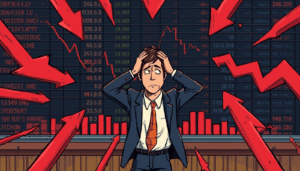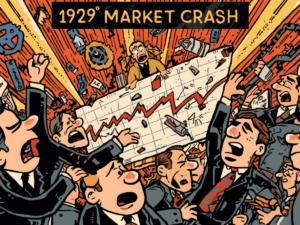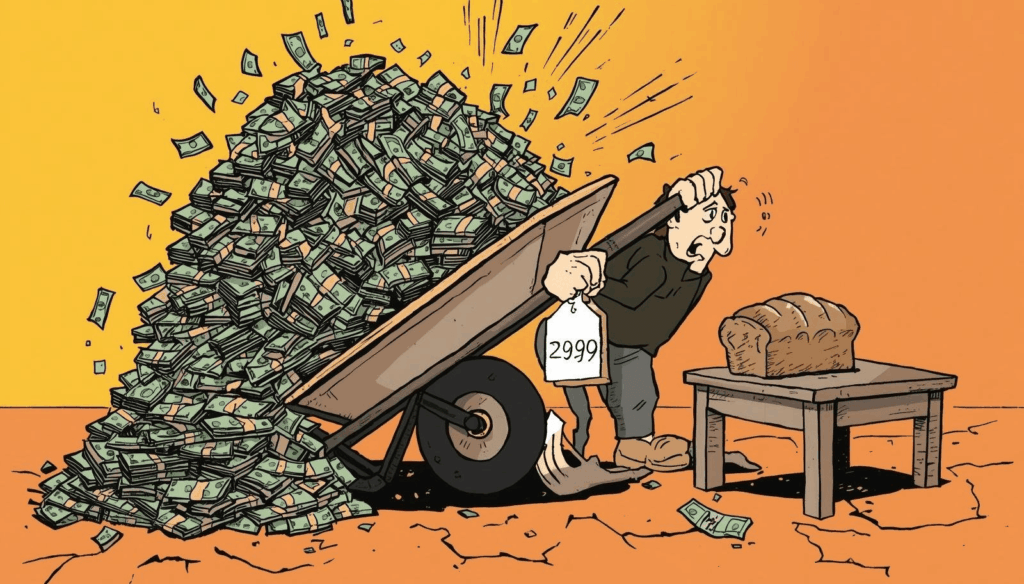
Picture this: you wake up, check the price of a loaf of bread, and find it’s twice what it was when you went to sleep the night before. You go to the bank to withdraw savings you spent years building, and by the time you reach the bakery, that money buys less than half of what you needed. You are not in a nightmare. You are living through hyperinflation — one of the most destructive economic forces ever recorded. That is not a hypothetical. That is exactly what millions of ordinary people experienced in Germany in 1923, Zimbabwe in the 2000s, and Venezuela within the last decade.
This article explains what hyperinflation is, why it happens, what it does to real people’s money and daily lives, and what the historical record tells us about how economies eventually recover—no economics degree required.
Watch the Money Nudge YouTube video about Inflation:
Prefer to watch instead of read?
Subscribe to The Money Nudge on YouTube for plain-English videos on money, investing, and economic topics.
Table of Contents
Hyperinflation Definition: What Sets It Apart From Ordinary Inflation
Most people have a working sense of regular inflation. Prices go up over time. A bag of groceries that cost $80 a few years ago now costs $95. That is uncomfortable, but it is manageable. Wages tend to adjust, and central banks work to keep inflation within a predictable range — typically around 2% annually in most developed economies.
Hyperinflation is something categorically different. Economists generally define hyperinflation as a period where monthly price increases exceed 50%. That works out to prices more than doubling every month. At that rate, a product that costs $1.00 on January 1 would cost over $130 by December 31 of the same year. The threshold most economists use comes from a 1956 paper by Philip Cagan. While the exact cutoff is debated, the practical reality of hyperinflation is unmistakable: prices spiral so fast that money loses its basic function as a store of value.
The difference between inflation and hyperinflation is not merely a matter of degree. It is a difference in kind. Normal inflation erodes purchasing power gradually. Hyperinflation destroys it in real time. Savings accounts become worthless before you can empty them. Wages paid on a Friday mean less by Monday. Long-term financial planning becomes impossible because no one can predict what anything will cost tomorrow.

Do You Think The Dot-Com Bubble was a result of Hyperinflation?
The Dot-Com Bubble Explained.
Read Article →What Causes Hyperinflation: The Conditions That Allow It to Spiral
Understanding the causes of hyperinflation starts with one core mechanism: too much money chasing too few goods. When a government or central bank floods an economy with new currency faster than the economy can produce real goods and services, prices rise sharply to absorb the excess money. But hyperinflation does not just appear because a central bank loosens policy slightly. It requires a specific set of conditions that reinforce and accelerate each other.
The most common trigger is government overspending without the means to pay for it. When a country runs large budget deficits and cannot raise enough tax revenue or borrow from creditors, the most tempting solution is to print more money. In the short term, printing money covers the gap. But the newly printed currency dilutes the value of every existing unit. Prices rise. The government then needs to print even more to cover its costs at the new, higher price level. This feedback loop is called the inflationary spiral, and once it builds momentum, it is extraordinarily difficult to stop.
Political instability intensifies the problem. When populations lose confidence in their government and central bank, they stop trusting the currency. People spend money as fast as they receive it because holding it means watching its value evaporate. That behavioral shift further speeds up inflation. Supply shocks — war, sanctions, economic mismanagement, or collapsing production — compound the problem by shrinking the pool of goods even as the money supply expands. The result is an economy where prices do not just rise but race ahead faster than any individual can respond.
Do You Know The Role Interest Rates Play In The Economy?
A Simple and Clear Explanation.
Read Article →The Weimar Republic: When Wheelbarrows Became Wallets
Germany in the early 1920s produced some of the most viscerally striking images in economic history: workers being paid twice a day so they could spend their wages before they lost value; children playing with stacks of banknotes as if they were building blocks; a story, likely embellished but symbolically accurate, of a man who left a wheelbarrow full of cash outside a shop and returned to find the wheelbarrow stolen but the money left on the ground.
The Weimar Republic’s hyperinflation stemmed from the catastrophic economic aftermath of World War I. Germany had financed the war partly through borrowing and money printing rather than taxation, expecting to pay debts with reparations from a victorious outcome. The Treaty of Versailles imposed crushing reparations payments instead. Germany’s economy was already under severe strain when the French and Belgian occupation of the Ruhr industrial region in 1923 removed a major source of national production. The German government supported a campaign of passive resistance, paying striking workers by printing more money. The result was the complete collapse of the German mark.
At the height of the crisis in November 1923, prices were doubling roughly every four days. The exchange rate deteriorated from about 4.2 marks per US dollar before World War I to over 4 trillion marks per dollar by November 1923. Bread prices illustrate the scale of the destruction. In January 1923, a loaf sold for around 250 marks.
By November of the same year, that same loaf cost 200 billion marks. Workers earned billions of marks a day and still could not keep pace with rising prices. Retirement savings accumulated over a lifetime were effectively wiped out within months. The middle class, which had built financial stability through savings bonds and bank deposits, bore the heaviest losses. Many never financially recovered.
The Weimar hyperinflation ended only after Germany introduced a new currency, the Rentenmark, in November 1923, backed by a fixed supply and tied to the value of German land and industrial assets. The government simultaneously slashed spending and received international assistance through the Dawes Plan. The crisis ended, but the economic trauma it left behind shaped German political culture for generations and is widely cited as one of the factors contributing to the political instability of the 1930s.
Zimbabwe: When a Functioning Economy Collapsed Into Chaos
Zimbabwe’s hyperinflation in the 2000s provides a more recent and equally devastating example. The country had a functioning, if fragile, economy at independence in 1980. By 2008 and 2009, it had one of the worst currency collapses in recorded history. The Zimbabwe Dollar eventually reached an official peak inflation rate that the central bank itself struggled to measure, with estimates putting the annual rate at over 89 sextillion percent in November 2008.
The causes stemmed from a combination of political decisions and economic mismanagement. A land reform program that began in 2000 redistributed commercial farmland, often violently and without adequate transition planning, from experienced large-scale farmers to new landholders without the equipment or expertise to maintain production. Zimbabwe had been a net food exporter. Within a few years, it faced food shortages. Output in key industries fell sharply as skilled workers, investors, and businesses fled. Government expenditures continued to climb despite collapsing revenues. Veterans’ benefits and the cost of military operations in the Democratic Republic of Congo added sustained pressure to an already strained national budget. The Reserve Bank of Zimbabwe printed money to cover the gap.
By the peak of the crisis, Zimbabwe issued notes with astronomical face values to allow basic transactions. The central bank released a 100-trillion-dollar note, which at the time of its printing could purchase only a few loaves of bread. Shops experienced daily price changes. Workers demanded wages in foreign currency because Zimbabwean dollars held their value for only a few hours at best. Ordinary people converted any cash they received into goods immediately, understanding that the physical product would hold its value while the paper currency would not. The banking system effectively collapsed as deposits lost value faster than banks could manage.
Zimbabwe eventually abandoned its own currency in 2009 and adopted a multi-currency system using US dollars and South African rand. Inflation stopped almost immediately because the government could no longer print currency in circulation. The economy stabilized, though the damage to institutions, savings, and productive capacity persisted for years.
Venezuela: A More Recent Collapse With Lessons Still Unfolding
Venezuela’s hyperinflation in the 2010s differs from earlier examples in one important way: its causes were fully visible in advance, yet the crisis still unfolded. Venezuela is an oil-rich nation. At one point, it had the largest proven oil reserves in the world. But an economy built almost entirely on oil revenues, combined with price controls, heavy government subsidies, underinvestment in productive sectors, and eventually political instability and international sanctions, created the conditions for one of the most severe currency collapses in modern Latin American history.
The International Monetary Fund estimated Venezuela’s inflation rate hit over 1,000,000% in 2018. The bolivar lost value so rapidly that the government redenominated the currency multiple times, slashing zeros to make transactions manageable. A strong bolivar became a sovereign bolivar, then a digital bolivar, as the government repeatedly tried to reset the numbers on paper while the underlying collapse continued. Supermarket shelves emptied. Medicines became difficult to obtain. Millions of Venezuelans emigrated to neighboring countries. By some estimates, more than seven million people left the country between 2015 and 2023, representing one of the largest migration crises in the Western Hemisphere.
What makes the Venezuelan case especially instructive is the role of price controls and foreign currency restrictions. The government attempted to prevent price increases by making it illegal to charge above certain levels. The result was not price stability but empty shelves as suppliers found it unprofitable to sell. Black markets developed for food, medicine, and foreign currency. People holding US dollars or euros could survive more easily than those holding bolivars. Savings denominated in local currency were wiped out entirely. The experience illustrates a fundamental principle that all three hyperinflation examples confirm. When trust in a currency is destroyed, no policy paper or government decree can restore it without structural economic change.
What Hyperinflation Actually Does to Savings, Wages, and Everyday Life
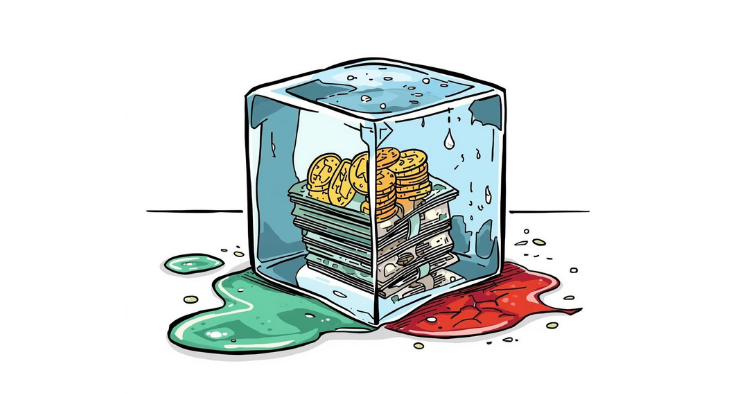
The most important thing to understand about hyperinflation’s effect on savings is that it acts as an invisible tax on anyone who holds cash or cash-equivalent assets. A person who spent years putting aside the equivalent of $50,000 in a savings account denominated in a hyperinflating currency can watch that $50,000 effectively become worthless without a single transaction occurring. The money is still in the account. The numbers are still there. The purchasing power has evaporated.
Fixed-income earners and retirees suffer most severely. Wages can sometimes — though not always — be adjusted upward as prices rise. But a pension that pays a fixed monthly amount, or a bond that pays fixed interest, provides less real value each week during hyperinflation. In the Weimar Republic, war veterans, pensioners, and middle-class professionals who had dutifully saved in government bonds found themselves unable to afford necessities despite holding what they believed were secure financial instruments. That sense of betrayal by institutions that were supposed to be safe had lasting psychological and political consequences.
Day-to-day life under hyperinflation takes on a surreal quality. Grocery stores may change price tags multiple times a day. Workers lobby to be paid daily or even twice daily rather than weekly, because a week’s delay means a week of value erosion. Restaurants stop printing menus because the numbers are outdated by the time the ink dries. Physical goods — food, fuel, durable items — become more valuable than currency itself, and bartering returns as a practical transaction method. People who own property, foreign currency, or commodities fare far better than those whose wealth sits in local-currency savings or wages.
Why Every Personal Budget You Have Tried Has Failed (And What to Do Instead)
Read Article →How Hyperinflation Connects to Recession and Broader Economic Crisis
Hyperinflation rarely arrives as the only crisis in an economy. It typically accompanies or follows a severe recession — a contraction in economic output that erodes the tax base and pushes governments toward deficit spending. The relationship between the two is reinforcing. A recession reduces government revenues, tempting the money-printing response that triggers inflation. Hyperinflation then destroys business confidence and investment, deepening the economic contraction. In Zimbabwe’s case, hyperinflation and recession were simultaneous, each making the other worse. Venezuela’s hyperinflation developed during a period of sharply falling oil revenues that created the fiscal crisis in the first place.
Understanding hyperinflation also reinforces why monetary policy matters in normal economic times. Central bank independence, inflation targets, and fiscal discipline are often discussed in abstract policy terms. But the human consequences of abandoning those frameworks are concrete, measurable, and severe. Hyperinflation occurs when the mechanisms designed to anchor price stability fail or are deliberately dismantled.
How Governments Have Tried to Stop Hyperinflation
History provides several approaches to ending hyperinflation, and the record shows clearly that some work far better than others.
Currency reform, combined with fiscal discipline, is the most consistently effective approach. Germany’s Rentenmark in 1923 worked not because the currency was inherently magical but because it came alongside spending cuts, a fixed supply limit, and international support. The government stopped printing money to cover deficits. Zimbabwe’s stabilization in 2009 worked because dollarization removed the government’s ability to print currency altogether. The supply of money became constrained by external factors rather than domestic political decisions. Venezuela has been slower to stabilize precisely because the underlying fiscal and political conditions that drove the crisis persisted long after the worst inflation peaks.
Price controls, by contrast, have consistently failed to stop hyperinflation and typically make shortages worse by eliminating the market signals that guide production and distribution. They can suppress the visible number on a price tag while accelerating the real erosion of supply and economic activity.
Independent central banks with clear mandates for price stability represent the structural lesson most economies have drawn from the historical record. A central bank that politicians cannot pressure to print money to finance spending is a structural safeguard against the feedback loop that produces hyperinflation. This is not a perfect safeguard — institutional independence can erode over time. Still, it represents the most durable mechanism developed economies have found to prevent the conditions that allow hyperinflation to take hold.
The Lessons Hyperinflation Holds for Monetary Policy and Fiscal Discipline Today
The three episodes examined in this article — the Weimar Republic, Zimbabwe, and Venezuela — span different continents, different eras, and different political systems. They share a common thread: governments that lost control of money creation and were unable or unwilling to implement the fiscal discipline required to restore stability before the collapse became severe.
The lesson for monetary policy is that price stability is not just a technical achievement. It is a foundation of trust between a government and its citizens. That trust is hard to build and shockingly easy to destroy. Once people no longer believe their currency will hold value, they act in ways that accelerate the collapse. The velocity of money — how quickly people spend it rather than hold it — rises sharply, feeding the price spiral the government is trying to manage.
The lesson for understanding inflation, explained in human terms, is that inflation is not just a number on a government report. It is a lived experience that affects every transaction, every savings decision, and every plan a person makes for the future. Mild, predictable inflation is a manageable condition that most economies successfully operate within. Hyperinflation is evidence of what happens when the systems designed to prevent runaway price increases break down entirely.
For anyone trying to build a clearer picture of how economies work and fail, examples of historical hyperinflation offer some of the most vivid and instructive evidence available. They are not ancient abstractions. They are events that happened within living memory, affecting tens of millions of ordinary people who did everything expected of them — saved, worked, planned — and still lost nearly everything.
Final Thoughts: Why Hyperinflation Still Matters
Every country that has experienced hyperinflation thought it was insulated from the worst outcomes until it was not. The Weimar Republic had a sophisticated industrial economy. Zimbabwe had functioning institutions at independence. Venezuela had enormous resource wealth. None of those advantages prevented collapse once the fundamental conditions — unconstrained money creation, collapsing output, and eroding institutional trust — aligned.
The history of hyperinflation is ultimately a story about what money actually is. Money has no intrinsic value. A banknote is useful only because enough people believe it will be accepted when they try to spend it the next day. Hyperinflation occurs when that trust fails. Understanding how it happens, what it costs in human terms, and how societies have recovered from it is one of the most practical lessons economic history has to offer.
The numbers in this history are staggering — trillions, sextillions, millions of percent. But behind every statistic is a person who worked for wages that evaporated, saved for a future that was stolen, or made plans that became impossible. That is why hyperinflation matters. Not as a curiosity in economic textbooks. As a real and recurring consequence of losing control of the most basic tools of economic stability.
Watch It Instead
The Money Nudge — YouTube Channel
Prefer watching over reading? Every topic on this blog also comes to life as an animated video on our YouTube channel — where we make money talk even more simply.
Visit Our Channel