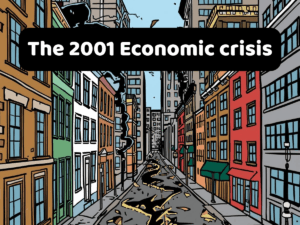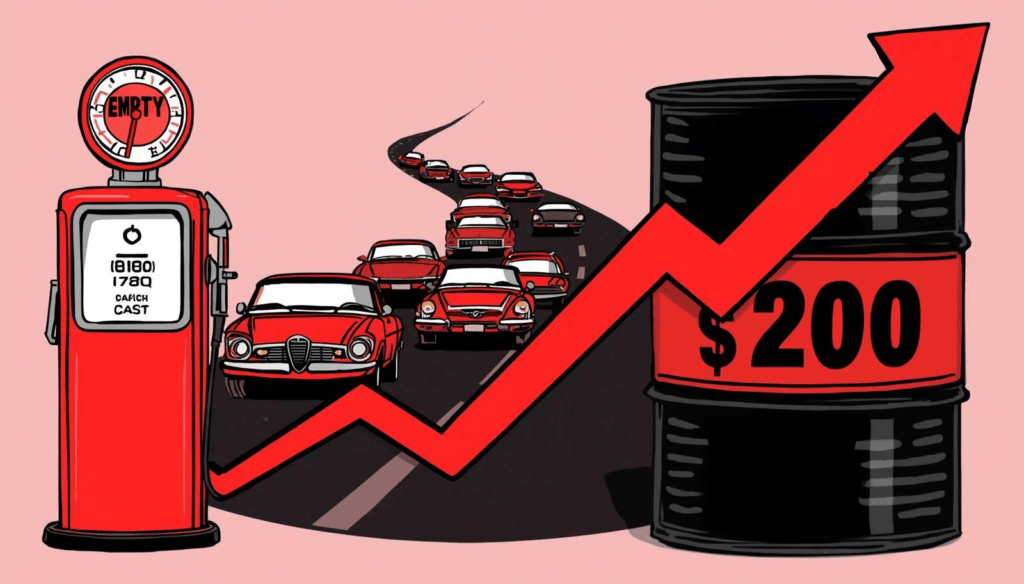
Gas station lines stretched for six city blocks. Drivers waited three hours to fill half a tank. Some stations posted handwritten signs reading “No Gas Today,” and a few closed for good. Fistfights broke out at the pump. In parts of the United States, fuel was rationed by license plate number. Schools shortened their days to save on heating. Factories slowed production. Highway speed limits were dropped to 55 miles per hour to stretch every gallon.
The oil crisis of 1973 was the moment the modern world learned how fragile its economy really was. One policy decision, halfway across the globe, reached American driveways, European factories, and Japanese kitchens within weeks. Prices of almost everything began to climb, and unemployment rose at the same time, something economists had told the public was nearly impossible.
This article walks through what happened, why it happened, and why the ripple effects of that winter still shape how governments, businesses, and households think about energy today—no economics degree required.
Watch the Money Nudge YouTube video about Recession:
Prefer to watch instead of read?
Subscribe to The Money Nudge on YouTube for plain-English videos on money, investing, and economic topics.
Table of Contents
The World Before the Oil Crisis of 1973
To understand the shock, it helps to picture the world as it looked in the late 1960s and early 1970s, before the 1973 oil crisis.
Cheap oil was the quiet engine of global prosperity. After World War II, Western economies grew at a pace never seen before. Cars became standard in middle-class households. Suburbs expanded. Plastics, synthetic fabrics, fertilizers, and shipping all depended on petroleum. Factories ran on it. Homes were heated with it. Entire cities were designed around the assumption that gasoline would always be affordable and always available.
For most of that era, a barrel of oil cost about $3. Adjusted for the times, that was astonishingly cheap. Consumers rarely thought about where their fuel came from, and policymakers treated energy supply as a background detail rather than a strategic concern.
The problem was that most of the world’s easily accessible oil sat under a handful of countries in the Middle East. The United States had once been the world’s largest producer, but domestic output peaked in 1970 and began declining. As American demand kept growing, the gap was filled by imports. Western Europe and Japan were even more exposed, since they produced almost no oil of their own. Japan, in particular, imported more than 90 percent of its energy.
This setup looked stable on the surface. It was not. The global economy had quietly wired itself to a single region, and very few people outside the industry understood how tightly that knot had been tied.
Have You Ever Heard About Hyperinflation?
Read Article →What OPEC Was and What Triggered the 1973 Oil Embargo
A group of oil-producing nations joined forces in 1960 to create OPEC, shorthand for the Organization of the Petroleum Exporting Countries. Saudi Arabia, Iran, Iraq, Kuwait, and Venezuela were the five founding members. Additional countries signed on in later years. The purpose of the alliance was practical. Coordinating output and pricing gave these nations a way to claim real authority over a resource that Western oil companies had controlled and priced for most of the prior century. For most of the 1960s, OPEC operated quietly in the background. That changed in October 1973.
Fighting erupted across the Middle East on October 6 of that year. Egypt and Syria led a coalition of Arab states into a full-scale war against Israel. The United States and several Western European governments stood behind Israel, and military supplies were shipped in support. The Arab members of OPEC responded by turning oil into a political weapon for the first time in history.
On October 17, 1973, they announced the 1973 oil embargo. The member states agreed to cut oil production and ban exports to countries that had supported Israel. The United States was the primary target, along with the Netherlands, Portugal, and a few others. The embargo lasted about five months, ending in March 1974, but the damage did not end with it.
Within weeks, the global price of oil quadrupled. A barrel that had cost around three dollars rose to nearly twelve. That increase flowed into every corner of the economy almost immediately.
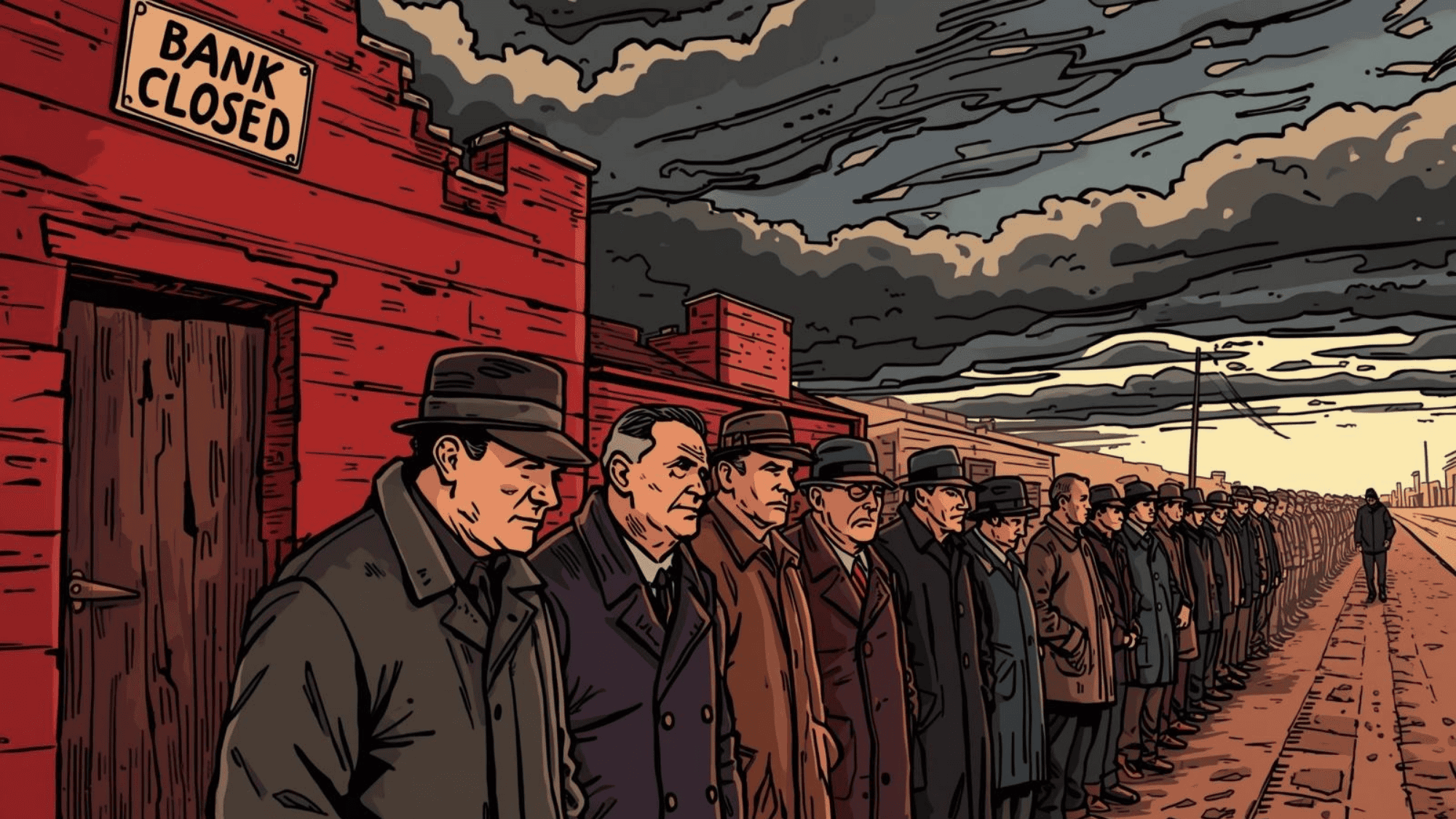
Here Is Everything You Need To Know About How The Great Depression Started…
Read Article →The Immediate Effects: Fuel Shortages and Everyday Chaos
The human side of the 1973 oil crisis hit fast and hard. In the United States, gasoline shortages appeared within weeks. Stations ran out of fuel by mid-morning. Many states introduced odd-even rationing, which allowed drivers to buy gas only on days whose last digit matched the last digit of their license plate. Some cities imposed strict purchase limits, often capped at ten gallons per visit. Drivers slept in their cars overnight to hold a spot in line.
Truckers launched protests against the new fuel prices and the lower highway speed limits, which were cutting into their earnings. Their strikes blocked highways and slowed freight across the country. Airlines reduced flights. School districts canceled bus routes or moved classes to half days. Thermostats in federal buildings were lowered to 68 degrees, and then lower still.
Families noticed the crisis at every layer of daily life. Heating oil prices climbed sharply just as winter arrived. Grocery bills went up because food had to be grown, packaged, and transported using fuel that was now far more expensive. Working-class households felt the squeeze first and hardest, since they spent the largest share of their income on basic needs.
Western Europe faced similar scenes. Britain introduced a three-day work week in early 1974 to conserve energy, and rolling blackouts left neighborhoods dark for hours at a time. The Netherlands banned Sunday driving, turning highways into empty stretches used only by cyclists and pedestrians. West Germany, Italy, and France each pushed through emergency fuel conservation measures.
Japan moved even more aggressively. The Japanese government urged businesses to dim office lights and asked citizens to cut back on hot water and heating. Public transportation adjusted schedules. Industries that relied heavily on oil, including petrochemicals and shipping, slashed production within weeks.
The shock reached far beyond wealthy nations. Developing countries that imported fuel saw their energy bills double or triple almost overnight. Many fell into debt crises in the years that followed, largely because they borrowed heavily to keep paying for oil they could no longer afford.
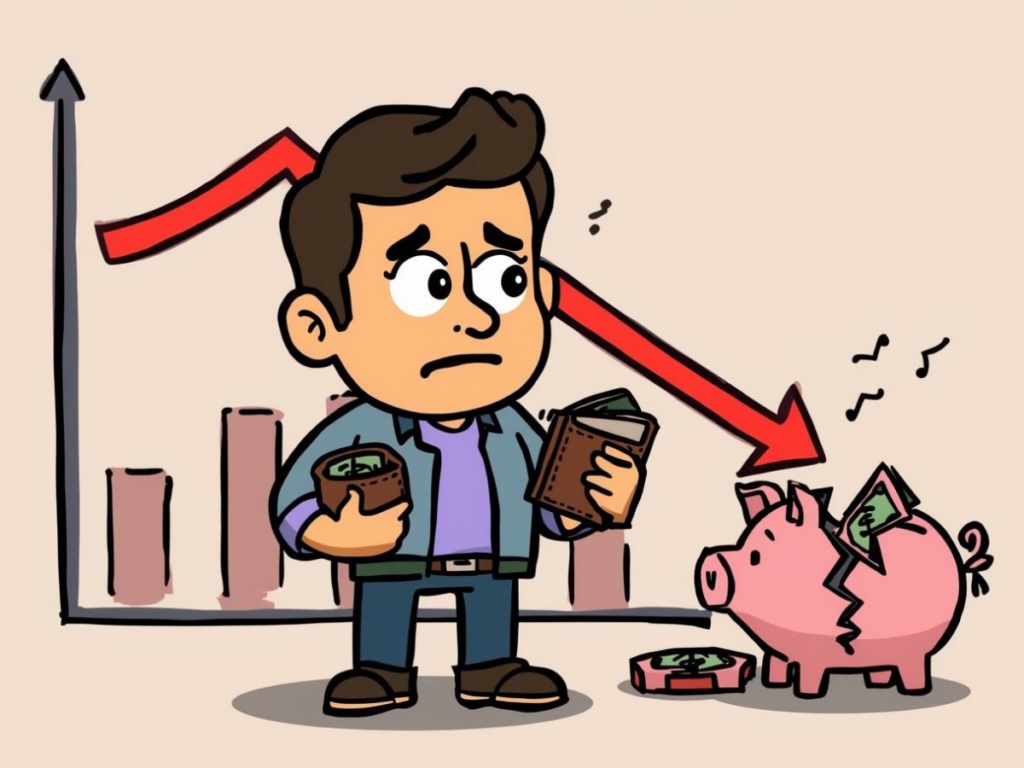
Do You Know How a Recession Starts?
Read Article →How the Shock Triggered a Recession and Inflation at the Same Time
Before we get into stagflation, it helps to zoom out and look at how the oil shock moved through the economy.
Oil touches almost everything a modern country makes, moves, or consumes. When the price of oil jumps by 300 percent in a few weeks, the cost of nearly every product rises with it. Trucking rates are climbing, which is raising grocery prices. Factories pay more for power and materials, which raises the cost of manufactured goods. Airlines raise ticket prices. Heating bills surge. Even products that do not seem oil-related, such as clothing and packaged food, ride on supply chains built around cheap fuel.
At the same time, households had less money left over to spend on anything else. Every extra dollar spent on gas and heating was a dollar not spent on restaurants, clothing, or entertainment. Businesses in those sectors saw sales drop. Layoffs followed.
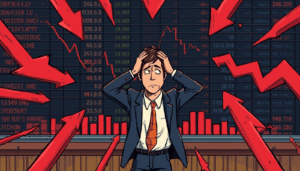
The United States economy slid into a painful recession that ran from late 1973 into 1975; gross domestic product shrank. Unemployment climbed. The stock market lost almost half its value over roughly 20 months, the worst decline since the 1929 Market Crash.
What made this downturn different from earlier recessions was the price story. Normally, when economies slow down, prices fall or at least stop rising, because fewer people are buying. This time, prices kept climbing even as the economy shrank. Consumer prices in the United States jumped more than 11 percent in 1974 alone. That combination of stagnant growth, rising unemployment, and rising prices did not fit the economic playbook anyone was using at the time. Economists gave it a name that stuck: stagflation.
Did You Know That The Central Bank Has a Hidden Power?
A Simple and Clear Explanation.
Read Article →Stagflation Explained in Plain Language
Stagflation combines two words that are supposed to be opposites. Stagnation means the economy is not growing, and unemployment is rising. Inflation means prices are going up. Traditional thinking said you could have one or the other, but not both at the same time. The oil crisis of 1973 proved that assumption wrong.
Picture a household earning 800 dollars a month. A fifth of that household’s budget goes to fuel and energy. Now imagine that energy costs double in a single year. The household is suddenly paying 320 dollars for what used to cost 160. That leaves only 480 dollars for rent, food, clothing, and everything else, even though nothing else has gotten cheaper. In fact, everything else is getting more expensive because the businesses that make those goods are also paying more for energy.
The family has two options. Cut back on spending, or go into debt. Most cut back. When millions of families cut back at once, businesses lose customers and start laying off workers. Unemployment rises, which is the stagnation side of the equation.
Meanwhile, prices keep climbing because the root cause, expensive oil, has not gone away. Workers who still have jobs start asking for higher wages to keep up with rising costs. Employers raise prices to pay for those wages. That feeds more inflation, which sparks more wage demands, and so on. Economists call this a wage-price spiral.
Governments were stuck. The usual tools for fighting inflation, such as raising interest rates and cutting spending, tend to slow the economy down and push unemployment even higher. The usual tools for fighting unemployment, such as cutting interest rates and boosting spending, tend to worsen inflation. Every lever they pulled made one problem better and the other problem worse.
Stagflation explained one of the hardest policy dilemmas of the 20th century in a single word. The 1973 oil crisis did not just cause a recession. It created a recession that refused to behave like a recession was supposed to.
How To Stop Living Paycheck- to-Paycheck…
Read Article →How Different Countries Responded
The oil shock tested every major economy, and each one reacted differently based on its resources, politics, and industrial base.
The United States
The United States responded with a mix of short-term rules and long-term rethinking. Congress passed the Emergency Petroleum Allocation Act, which gave the federal government the power to set oil prices and allocate supplies. President Nixon asked Americans to turn down their thermostats, carpool, and skip unnecessary driving. Highway speeds were capped nationally at 55 miles per hour starting in 1974. The rule was sold to the public as a conservation tool, one that squeezed a little more distance out of every gallon, and it remained federal law for many years afterward.
Behind the scenes, Washington started building what would become the Strategic Petroleum Reserve, a massive emergency oil stockpile designed to cushion future shocks. Congress also established the Department of Energy in 1977, giving energy policy a dedicated cabinet-level home for the first time. Fuel-economy standards for cars, known as CAFE standards, were signed into law in 1975 and required automakers to produce vehicles that went farther on a gallon of gas.
Western Europe
Western European countries leaned hardest into conservation and diversification. France made a decisive bet on nuclear power, launching an aggressive construction program that made nuclear the backbone of its electricity grid within two decades. Britain accelerated the development of its North Sea oil reserves, which came online in large volumes by the late 1970s, thereby reducing its dependence on imports.
Germany, Denmark, and the Netherlands invested in public transportation, building denser rail networks and encouraging bike commuting in cities. Several countries also rolled out the first serious programs to weatherize homes, insulate buildings, and cut heating demand.
Japan
Japan had the fewest natural resources and arguably made the most dramatic pivot. Facing an economy that imported almost all its oil, Japanese policymakers and industry leaders pushed for energy efficiency across the board. Factories were redesigned to use less fuel. Electronics and appliances were reengineered to use less power.
The shift also reshaped Japan’s auto industry. Japanese automakers focused on small, fuel-efficient cars just as American consumers were starting to care about miles per gallon. That decision changed global markets. Within a decade, Japanese vehicles had captured a huge share of the United States market, and the balance of the global auto industry had shifted permanently.
What Lasting Changes Came Out of the Oil Shock Economy
The 1973 oil embargo set off a chain of changes that reshaped the world over the following decades. Some of those changes happened quickly. Others took years to unfold fully.
A New Focus on Energy Policy
Before 1973, energy policy was barely a distinct field in most countries. After the crisis, it became a top priority. Governments created dedicated agencies, built emergency reserves, and started planning for supply disruptions as a serious national risk rather than a distant possibility.
International cooperation also grew. The International Energy Agency (IEA) was founded in 1974 to coordinate responses to future energy crises among industrialized nations. Today, the IEA continues to play a central role in global energy analysis and emergency planning.
The Push for Fuel Efficiency
The cars of the early 1970s were large, heavy, and notoriously inefficient. A standard American sedan often averaged 13 miles per gallon. The oil shock made those vehicles uneconomical almost overnight, and consumers started demanding better.
New fuel economy standards forced automakers to invest heavily in smaller engines, lighter materials, and more efficient designs. Over the following two decades, average fuel economy in the United States nearly doubled. Similar trends played out across Europe and Asia, and fuel efficiency has remained a central pressure point in car design ever since.
Rethinking Economic Vulnerability
The crisis forced businesses and governments to confront a question they had never asked before. How exposed are we to a single point of failure in a global supply chain? Before 1973, just-in-time inventory, global sourcing, and lean production were seen as competitive advantages. After 1973, they started to look like risks.
Many companies began diversifying suppliers. Governments began thinking about economic security alongside military security. The idea that a sudden disruption far from home could shake an entire economy within days entered mainstream policy thinking and never really left.
The Rise of Alternative Energy Research
The oil shock economy also gave alternative energy its first real push. Funding for solar, wind, geothermal, and other renewable research expanded significantly in the late 1970s. Progress was slow, and when oil prices eventually fell in the 1980s, much of that funding pulled back. But the seeds planted during the crisis later grew into the clean energy industries of the 21st century.
Connecting 1973 to Later Economic Events
The 1973 oil crisis was not a one-off. It was the first chapter in a longer pattern of oil-driven economic shocks that continued for decades.
A second major oil crisis hit in 1979, triggered by the Iranian Revolution and a sharp drop in Iranian oil production. Prices more than doubled again, and inflation in the United States surged into double digits. To break the back of that inflation, the Federal Reserve under Chairman Paul Volcker pushed interest rates above 19 percent. Those rates did tame inflation, but they also triggered a severe recession in the early 1980s, with unemployment reaching nearly 11 percent in 1982.
That 1980s recession was a delayed consequence of the same dynamics that began in 1973. Stagflation had dug itself into the economy, and breaking it required painful medicine.
Later oil shocks followed similar patterns. Prices spiked during the 1990 Gulf War, again in the mid-2000s as global demand surged, and once more in 2022 during the war in Ukraine. Each time, governments and markets reached for the playbook written after 1973. Reserves were tapped, emergency measures were debated, and consumers felt the squeeze at the pump.
The 1973 energy crisis was the event that taught the world this playbook existed in the first place.
What the Oil Crisis of 1973 Still Teaches Us Today
More than 50 years later, the 1973 oil crisis still offers lessons that matter.
Interdependence Has a Price
Global trade and specialization have produced enormous gains. Goods are cheaper, variety is wider, and economies grow faster when they can lean on what the rest of the world produces well. But every web of interdependence also carries risk. A problem in one corner of the world can reach the other side within days, sometimes within weeks.
The pandemic years made this point again when supply chains for semiconductors, medical equipment, and basic consumer goods broke down almost overnight. Anyone who remembered the gas lines of 1973 recognized the pattern.
Supply Chains Are Fragile When Concentrated
The world did not depend only on oil in 1973. It depended on oil from a small number of countries. That concentration is what turned a political dispute into a global economic shock. Similar patterns exist today in other critical inputs, including rare earth minerals, advanced microchips, and certain pharmaceuticals. The specific commodities change, but the structural lesson holds.
Energy Security Is Economic Security
Before the 1973 oil crisis, most governments treated energy as an industrial rather than a national security concern. After 1973, that separation vanished. Today, energy is at the center of foreign policy, defense planning, and climate strategy, precisely because the events of that winter proved how quickly an energy shock can reshape everything else.
Consumers Are Never Far from the Action
The most human lesson from the oil-shock economy is how quickly abstract global events become kitchen-table issues. A policy announced in Vienna on a Wednesday became a line at a Philadelphia gas station by the following week. The grocery bill went up the week after that. The distance between a distant crisis and a real household budget is usually shorter than people expect.
Final Thoughts: A Shock That Reshaped Everything
The 1973 oil crisis reshaped the global economy in ways that are still unfolding. It forced the world to rethink how energy was produced, used, and how vulnerable economies were to sudden supply disruptions. It introduced the word stagflation into the public vocabulary. It left a policy puzzle that took more than a decade to solve. It changed which cars people drove, how houses were built, and how governments planned for emergencies.
Understanding the 1973 oil embargo is not just a history lesson. It is a window into how interconnected the modern economy really is and how small shifts in one corner of that system can send shockwaves through everything else. The gas lines are gone, but the lessons remain.
For anyone trying to make sense of why today’s economy moves the way it does, why energy prices matter so much, and why supply chain headlines command so much attention, the oil shock economy of 1973 is the story where a lot of that thinking began.
Watch It Instead
The Money Nudge — YouTube Channel
Prefer watching over reading? Every topic on this blog also comes to life as an animated video on our YouTube channel — where we make money talk even more simply.
Visit Our Channel