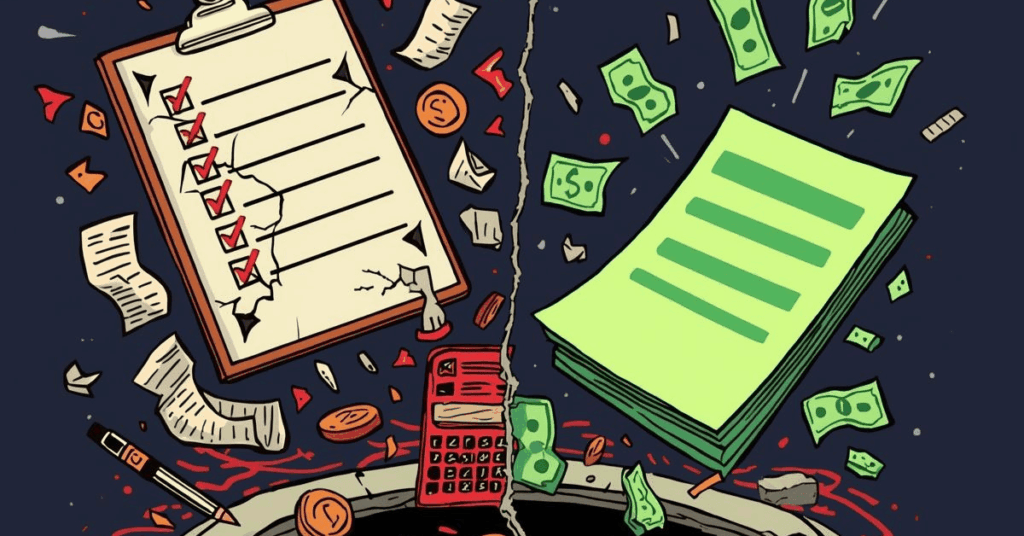
Most people have tried to create a personal budget at least once. They download an app, set up categories, track every purchase for a few weeks, and then quietly stop. The spreadsheet goes untouched. The app sends notifications that nobody opens. Within a month or two, the whole system falls apart, and the guilt sets in. This is not a personal failing. This is a pattern that affects millions of people every single year.
The problem is not a lack of discipline. The problem is that most budget systems are built on assumptions that don’t reflect how real people live, spend, and think about money. Understanding why budgets fail is the first step toward building a personal budget that actually works. This article breaks down the real reasons traditional systems collapse. It introduces a simpler approach that focuses on three numbers instead of dozens of categories.
Watch the Money Nudge YouTube Video about the definition of Finance:
Prefer to watch instead of read?
Subscribe to The Money Nudge on YouTube for plain-English videos on money, investing, and economic topics.
Table of Contents
The Personal Budget Failure Rate Nobody Talks About
Surveys consistently show that a large percentage of Americans do not follow a detailed personal budget. Some studies put the number at 65% to 70% of adults who either have no plan at all or have abandoned one within a few months of starting. That is not because people do not care about money. Most people care deeply about their finances. They worry about bills, debt, and whether they are saving enough.
The disconnect is between intention and execution. People want to manage their money better. They cannot sustain the systems that most guides recommend. When you search for how to budget online, you will find hundreds of articles that walk you through the same basic steps: list your income, categorize your expenses, assign a dollar amount to each category, and track everything. It sounds logical on paper. In practice, every personal budget built this way falls apart for reasons that have very little to do with math.
Understanding why budgets fail requires looking beyond the numbers and into the behavioral patterns that make traditional methods so hard to maintain.
Reason 1: Most Personal Budget Plans Are Too Rigid
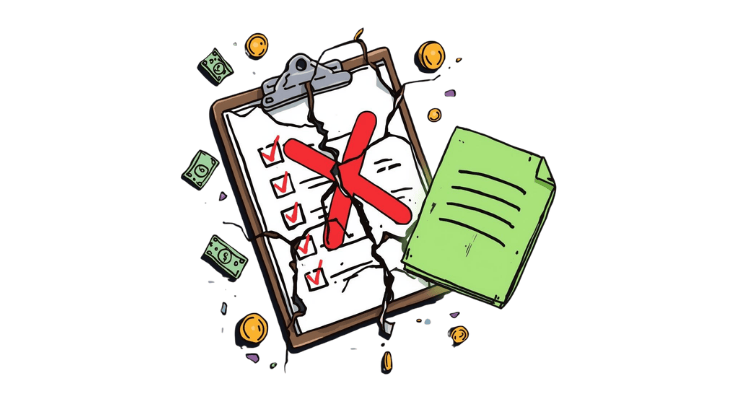
The most popular budgeting method involves assigning every dollar to a specific category. Groceries get $400. Gas gets $150. Entertainment gets $100. Dining out costs $75. A detailed plan like this sometimes stretches to 15 or 20 separate categories.
Here is the problem. Life does not operate in neat categories. One week, you spend more on groceries because you hosted a dinner. Next week, you will spend less on gas because you worked from home. A friend invites you to a concert, and suddenly, the entertainment line in your personal budget is blown for the entire month. Each time a category goes over, the system feels broken, even if your total spending is perfectly fine.
Rigid plans create a false sense of failure. You might spend $50 more on food and $50 less on gas in the same month, and your overall finances are exactly on track. But the personal budget shows you failed in the food category. That kind of feedback loop kills motivation fast. People learning to budget for the first time are especially vulnerable to this. They assume the problem is their willpower when the real problem is the system’s structure.
A simple budget system should have enough flexibility to absorb the normal ups and downs of daily life without making you feel like you need to start over every month.
Reason 2: Irregular Expenses Destroy Every Monthly Plan
A traditional personal budget focuses almost entirely on monthly expenses. Rent, utilities, subscriptions, groceries. These are the easy ones. They show up every month, and they are relatively predictable.
But a huge portion of real spending is not monthly at all. Car insurance might be due every six months. Property taxes come twice a year. Holiday gifts pile up in November and December. Back-to-school shopping hits in August. The dentist sends a bill every few months. A car repair shows up with no warning. These irregular expenses account for a significant chunk of annual spending, yet most templates completely ignore them.
When one of these expenses hits, it wrecks the monthly plan. Suddenly, the personal budget that looked so clean on January 1st is in chaos by March because the car needed new tires and the dog needed a vet visit. The person sees red numbers everywhere and concludes that budgeting does not work for them.
The truth is that the plan did not account for how money actually flows through a household. Budgeting for beginners often skips this reality entirely, which is one of the biggest reasons new budgeters give up so quickly. A good, simple budget system builds irregular expenses into the structure from the start, rather than treating them as surprises.
The minimum payment on your credit card is not a repayment plan. It is the entry fee for staying in debt.
Read Article →Reason 3: A Personal Budget Treats Money as a Math Problem Instead of a Behavior Problem
This is the deepest and most overlooked reason why budgets fail. Most systems assume that if you know the numbers, you will make good decisions. Calculate your income, subtract your expenses, and the right choices will follow.
But spending is not a purely rational activity. People spend money for emotional reasons all the time. A stressful day leads to an impulse purchase. A social outing can pressure you to spend more than your plan allows. A sale triggers a fear of missing out, even on something you did not need. Boredom, loneliness, celebration, and exhaustion all influence spending, and no spreadsheet accounts for that.
Behavioral economists have studied this extensively. People are not coldly rational when it comes to money. They are influenced by mental shortcuts, social pressure, emotional states, and the way choices are presented to them. A personal budget that ignores this reality is like a diet plan that ignores hunger. It might work for a few days, but it will not last.
The most effective approaches acknowledge that people are human. They built in room for imperfect decisions. They focus on the big picture rather than policing every transaction. And they make it easy to get back on track after a slip, rather than punishing you for one bad week.
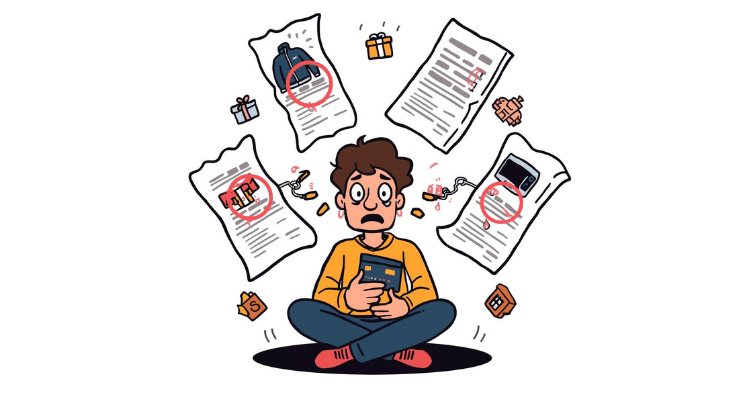
The minimum payment on your credit card is not a repayment plan. It is the entry fee for staying in debt.
Read Article →Reason 4: Decision Fatigue Kills Personal Budget Consistency
Every time you check your personal budget and decide whether a purchase fits into a specific category, you are making a decision. Multiply that by dozens of purchases per week, and the mental load adds up fast.
Psychologists call this decision fatigue. The more decisions you make in a day, the worse your later decisions become. Your brain gets tired, and it starts looking for shortcuts. In the context of managing money, decision fatigue shows up as avoidance. People stop checking the app. They stop logging receipts. They tell themselves they will catch up later, and “later” never comes.
This is especially true for people with busy lives, demanding jobs, or family responsibilities. Adding 15 to 20 categories that each require monitoring is adding a part-time job on top of everything else. It is no wonder people quit. A complex personal budget demands too much ongoing mental energy. When life gets hectic, it is the first thing that falls off the list.
A simple budget system should require as few ongoing decisions as possible. The less you have to think about spending daily, the more likely you are to stick with any plan over the long term.
Reason 5: Restriction Instead of Direction
The language around following a personal budget is almost entirely about what you cannot do. Do not spend more than $75 on dining out. Do not go over your entertainment limit. Do not buy anything outside the plan.
This restrictive framing creates a negative relationship with money. Instead of feeling empowered, people feel constrained. The plan starts to feel like a punishment rather than a tool. And just as overly restrictive diets tend to trigger the very behavior they are trying to prevent, overly restrictive rules do the same. People “break” their personal budget, feel guilty, and then overspend even more because they figure the month is already ruined.
The psychology here is well documented. Restriction increases desire. When you tell yourself you absolutely cannot spend money on something, that thing becomes more appealing, not less. A healthier approach focuses on direction rather than restriction. Instead of saying “my plan will not allow this,” a better framework says “I choose to direct X amount toward my savings goals, and everything else is mine to use freely.”
That shift in language might sound small, but it changes the entire experience of managing money. It turns a personal budget from a cage into a compass.
What to Do Instead: The Three-Number Personal Budget
If traditional systems fail because they are too complex, too rigid, and too focused on restriction, then the solution is a simple budget system that is flexible and focused on direction. This personal budget only requires three numbers. Here is how it works.
Number 1: Fixed Costs
Fixed costs are expenses you must pay every month, regardless of what happens. Rent or mortgage. Utilities. Insurance. Minimum debt payments. Subscriptions you genuinely use. Phone bill. These are the non-negotiable items that keep your life running.
Add them all up. This is your first number. For most people, fixed costs should ideally land around 50% to 60% of take-home pay. If they are higher than that, it does not mean the system is broken. It means you have identified an area that may need attention over time, by refinancing, downsizing, or renegotiating certain bills.
Number 2: Savings and Future Goals
Before you spend money on anything discretionary, your personal budget should set aside money for the future. This includes emergency fund contributions, retirement savings, debt payments above the minimum, and any other financial goal you are working toward.
A common starting point for budgeting for beginners is 10% to 20% of take-home pay. If that feels impossible right now, start with whatever you can. Even 5% is better than zero. The important thing is that this number gets set before you start spending, not after. Pay yourself first is one of the oldest pieces of financial wisdom, and it works because it removes the decision from your daily routine. Automate it if you can.
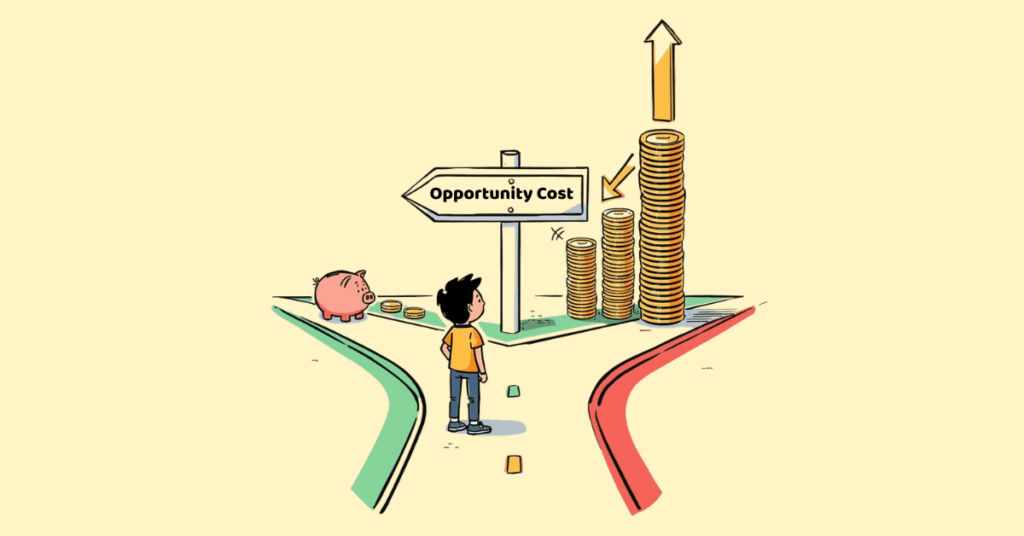
Everything You Should Know About The Opportunity Cost
Read Article →Number 3: Everything Else
Take your income, subtract your fixed costs, subtract your savings target, and whatever is left is your spending money. This is the part of your personal budget you can use for groceries, dining out, entertainment, clothing, hobbies, and anything else. You do not need to break it into 15 categories. You do not need to track every coffee. You need to stay within this one number.
That is it. Three numbers make up your entire personal budget: fixed costs, savings, and everything else.
Why the Three-Number Personal Budget Works
This approach to building a personal budget works because it addresses every failure point that traditional systems create.
It is flexible. You do not need to worry about whether a purchase falls under “groceries” or “dining out.” If it comes from your “everything else” number, it is fine. Overspend on food one week and underspend on entertainment the next. It all comes from the same pool.
It handles irregular expenses. You can build a buffer for irregular costs directly into the fixed costs section by adding monthly estimates for items such as car maintenance, medical copays, and annual subscriptions. Alternatively, you can include a “sinking fund” in your savings number, setting aside a small amount each month for predictable but non-monthly expenses.
It focuses on behavior, not math. Instead of tracking 20 categories, you track one spending number. That dramatically reduces decision fatigue. You check one number, ask yourself, “Am I on track this month?” and move on with your day.
It emphasizes direction over restriction. You are not telling yourself what you cannot buy. Your personal budget directs money toward your priorities first, and then you spend the rest as you see fit. That is a completely different psychological experience.
How to Set Up Your Personal Budget: A Step-by-Step Walkthrough
Getting started with this simple budget system takes about 30 minutes. Here is the process.
Step 1: Calculate Your Take-Home Pay
Start with the amount that actually hits your bank account each month after taxes and deductions. If your income varies, use the average of the last three months as your baseline. For people with highly irregular income, use the lowest month of the last six as a conservative starting point.
Step 2: List Every Fixed Cost
Go through your bank and credit card statements from the last three months. Write down every recurring expense that stays roughly the same each month. Include rent or mortgage, utilities, insurance premiums, minimum loan payments, phone and internet bills, and any subscriptions you intend to keep. Add a monthly estimate for irregular but predictable costs. If your car insurance is $600 every six months, that is $100 per month. If you spend roughly $1,200 on holiday gifts each year, that is $100 per month to set aside in your personal budget.
Step 3: Set Your Savings Target
Decide how much to direct toward savings or investments each month. If you are starting budgeting, aim for at least 10% of your take-home pay. If you have high-interest debt, the savings portion of your personal budget might go toward extra debt payments above the minimum. Adjust this number as your situation changes. The key is to treat it as non-negotiable once you set it.
Step 4: Calculate Your Spending Number
Take-home pay minus fixed costs minus savings target equals your spending money. This is the amount your personal budget has available for all discretionary spending for the month. Divide it by four to get a rough weekly target if that helps you pace yourself.
Step 5: Automate Everything You Can
Set up automatic transfers for your savings on payday. Set up autopay for as many fixed costs as possible. The fewer manual decisions you need to make, the more sustainable your personal budget becomes. Automation is what turns any plan from a daily chore into a background process.
Adjusting Your Personal Budget When Things Go Wrong
No plan survives every month perfectly, and that is fine. The three-number personal budget is designed to recover quickly.
If you overspend in a given month, you do not need to redo everything. You look at your three numbers and ask a simple set of questions. Did your fixed costs change? Did something unexpected come up? Did your discretionary spending run higher than usual? Identifying which number shifted tells you exactly where to focus.
If your fixed costs rose due to a rate increase or a new expense, adjust that number and recalculate. If your discretionary spending crept up, you aim to pull it back the following month. There is no guilt, no starting over, and no need to rebuild a 20-category spreadsheet from scratch.
This resilience is one of the biggest advantages over traditional systems. People who learn to budget with the three-number approach tend to stick with it longer, precisely because it does not collapse when the first thing goes off plan. A good personal budget bends rather than breaks.
Common Objections to a Simpler Personal Budget
“But I need detailed tracking to know where my money goes.”
You can still review your spending in detail if you want to. Nothing about this system prevents you from looking at your bank statement at the end of the month and seeing how much went to food versus entertainment. The difference is that the detailed review becomes optional rather than mandatory. You check it when you are curious, not because the system demands it daily.
“This seems too simple, actually, to work.”
Simplicity is the point. Complex systems have higher failure rates because they require more effort to maintain. A simple plan you follow for 12 months will always outperform a detailed one you abandon after 6 weeks. Consistency beats complexity whenever it comes to budgeting effectively.
“I have debt. Do I need a more detailed plan?”
If you are managing multiple debts, you can still use the three-number framework. Your fixed costs include minimum payments on all debts. Your savings number can include extra payments directed at your highest-interest debt. This framework gives you a clear picture of how much room you have to accelerate debt payoff without losing track of the big picture.
Making Your Personal Budget Stick: Five Behavioral Tips
Beyond the structure itself, a few behavioral strategies can dramatically increase your chances of long-term success.
Tip 1: Review weekly, not daily. Checking your personal budget once a week is enough to stay on track without creating daily anxiety. Pick the same day each week, spend 5 minutes reviewing your spending, and move on.
Tip 2: Use round numbers. Your savings target does not need to be $347.52. Make it $350 or $400. Round numbers are easier to remember, easier to track, and easier to automate.
Tip 3: Build in a buffer. Add 5% to 10% to your fixed costs estimate as a cushion. This prevents small overages from throwing off your entire month. The buffer absorbs the noise of real life.
Tip 4: Celebrate progress, not perfection. If you saved more this month than last month, that is a win. If you stayed within your spending number for three weeks out of four, that is a win. Progress compounds over time, even if your personal budget is not perfect every single month.
Tip 5: Reassess quarterly. Your three numbers are not permanent. Income changes, expenses shift, and priorities evolve. Sit down every three months and ask whether your personal budget still reflects your current situation and goals. Adjust as needed. A personal budget should grow with you, not lock you into a plan you made six months ago.
Why Budgeting for Beginners Should Start Simple
If you are new to managing money, the worst thing you can do is start with the most complex system available. Detailed zero-based plans, envelope systems with a dozen categories, and apps that require logging every transaction. These tools have their place, but they are not the right starting point for someone who has never had a working personal budget before.
Budgeting for beginners should focus on building the habit of paying attention to money, not on achieving perfection from day one. The three-number system does exactly that. It asks you to know three things about your finances, and it lets everything else remain flexible until you are ready for more detail.
Many people find that once they have used a simple personal budget for a few months, they naturally start noticing patterns in their spending. They realize they spend more on dining out than they thought, or they discover that their subscription costs have crept up. These insights happen organically, without the system demanding them. And when they happen naturally, people are more motivated to act on them.
Starting with a simple personal budget is not settling for less. It is building a foundation that can support a more detailed approach later, if and when you want one.
The Bigger Picture: Your Personal Budget as a Direction, Not a Destination
The reason why budgets fail is not that people are bad with money. It is that the systems they try are designed for an idealized version of life that does not exist. Real life is messy, unpredictable, and full of expenses that don’t fit neatly into categories.
A good personal budget does not try to control every dollar. It sets a direction. It makes sure the important things are covered, that future goals are getting funded, and that daily spending stays within a sustainable range. Everything beyond that is just noise.
When you stop trying to micromanage your money and start directing it toward what matters most, something shifts. Your personal budget stops feeling like a chore and becomes a choice. You are not tracking expenses because an app told you to. You are managing your money because you know where you want it to go.
That is the difference between a plan that fails and a personal budget that lasts.
Final Thoughts
Every person who has tried and failed at creating a personal budget has learned something valuable, even if it does not feel that way. They have learned what type of system does not work for them. That is useful information.
The next step is not to try harder at the same approach that already failed. The next step is to try a different kind of personal budget, one that respects how real people actually live and spend. The three-number system is not the only way to manage money, but it is one of the simplest and most forgiving. It works because this personal budget is easy to start, maintain, and recover from when life throws a curveball.
If you have been searching for how to budget and keep running into the same overcomplicated guides, this is your permission to simplify. Set up your personal budget with three numbers. Automate what you can. Review once a week. And stop punishing yourself for being human.
The best personal budget is the one you actually follow. Make it simple enough that you will.
Watch It Instead
The Money Nudge — YouTube Channel
Prefer watching over reading? Every topic on this blog also comes to life as an animated video on our YouTube channel — where we make money talk even more simply.
Visit Our Channel