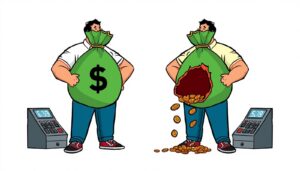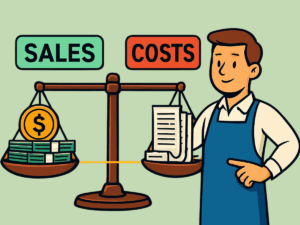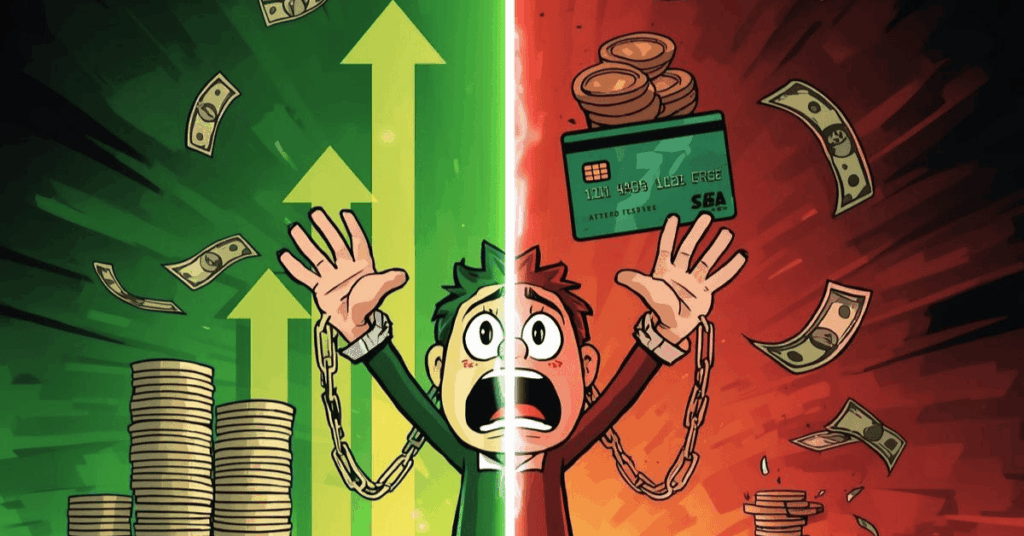
A bakery in its third year of operation lands a large wholesale contract with a local hotel chain. Orders go up. Revenue goes up. The income statement looks better than ever. Then, six weeks later, the owner cannot make payroll. The flour supplier is calling. The landlord is waiting. The business is not failing because it stopped making sales. It is failing because the money it earned has not arrived yet, and the money it owes is due right now. This is a cash flow problem, and it is one of the most misunderstood threats in small business ownership.
Cash flow is not a complicated concept, but it gets overlooked until a crisis forces the conversation. This article explains what it actually means, how it differs from profit, and why understanding it can be the difference between a business that survives growth and one that collapses under it.
Watch the Money Nudge YouTube Video about the definition of Finance:
Prefer to watch instead of read?
Subscribe to The Money Nudge on YouTube for plain-English videos on money, investing, and economic topics.
Table of Contents
What Cash Flow Actually Means
Every business has two streams of money running at all times: what comes in and what goes out. A customer payment lands in the account and adds to the inflow. Wages, rent, supplier invoices, and utility bills are pulled from it on the other side. Track both streams over any given period, add up the net result, and that figure is your cash flow.
That definition sounds simple, and it is. The confusion usually begins when people assume that strong sales automatically mean healthy cash flow. They do not. A business can generate significant revenue and still run out of usable cash if its inflows and outflows do not align.
Cash flow is about liquidity, meaning how much actual money is available at any given moment to cover obligations. It is not about what is owed to you, what you have sold, or what your accounting software projects your balance will be next month. It is about what is sitting in the account and what needs to leave it before more arrives.
For a small business owner without a finance background, the most useful way to think about it is this: it is the pulse of a business. Profit tells you whether the business model is working. Cash flow tells you whether the business can stay alive long enough to prove it.

What Is The Real Definition Of Finance?
Read Article →Cash Flow and Profit Do Not Measure the Same Thing
This is the distinction that trips up the most business owners, and it is worth spending real time on. Profit and cash flow measure entirely different things, and a business can have one without the other.
Profit is the amount left over after you subtract expenses from revenue. Take a business that moves $100,000 in product during a single month. After $75,000 in costs, the income statement shows $25,000 in net income. That figure is accurate as far as it goes. What it does not show is whether any of that $25,000 has actually been deposited into the account.
Cash flow measures something different: whether the actual dollars moved through your accounts in a way that keeps you solvent. Here is a concrete example.
Imagine a landscaping company that completes $80,000 worth of jobs in October. All those jobs are invoiced to commercial clients with 60-day payment terms, meaning the checks will not arrive until December. In November, payroll comes due, insurance renews, and equipment financing draws automatically. The company has $80,000 in earned revenue. It has little to no cash. Every obligation that hits in November is a problem, even though the income statement shows a profitable October.
This is the gap between profit and cash flow. Profit is an accounting figure. Cash flow is a reality check. A business that consistently shows paper profits but mismanages cash timing can run out of operating cash before it ever collects what it has earned.
Most businesses operate on accrual-based accounting, which records revenue when it is earned rather than when it is collected. Expenses land on the books when they are incurred, not when the check clears. That approach produces an accurate long-run picture of whether the business is profitable. It does not answer the more immediate question: Is there enough cash in the account right now to cover what is due this week?
Learn The Difference Between Finance Vs. Accounting
Read Article →The Three Types of Cash Flow, Explained Simply
A formal cash flow statement breaks activity into three categories. Understanding what each one tracks helps you read the picture more clearly.
Operating Cash Flow
Operating cash flow covers the money generated by the core activities of running the business. It includes cash received from customers, cash paid to suppliers and employees, and cash spent on rent, utilities, and day-to-day operations.
Operating cash flow is the figure most small business owners think about when cash flow comes up in conversation. It answers one direct question: Does the business generate more cash from running its core operations than it consumes? A positive figure means day-to-day activity is producing a surplus. A negative figure indicates the business is drawing down reserves to stay operational, a condition that cannot continue indefinitely.
Investing Cash Flow
Investing cash flow tracks money spent or received in connection with long-term assets. Buying new equipment, purchasing a vehicle, acquiring property, or investing in another business all fall under this category. So does selling those assets.
Negative cash flow is not necessarily bad. A growing business often spends heavily on equipment or infrastructure. The concern arises when investing cash outflows are so large that they drain the operating reserves the business needs to stay current on its obligations.
Financing Cash Flow
Financing cash flow reflects money that moves due to borrowing, loan repayments, or interactions with the business’s owners. Taking out a bank loan brings cash in. Repaying that loan sends cash out. An owner putting personal funds into the business shows up here, as does an owner withdrawing money.
Financing cash flow can temporarily prop up a business that is struggling with operating cash. But it is not a permanent solution. Borrowing to cover operating shortfalls adds debt service costs, making the underlying cash flow problem more difficult to solve over time.
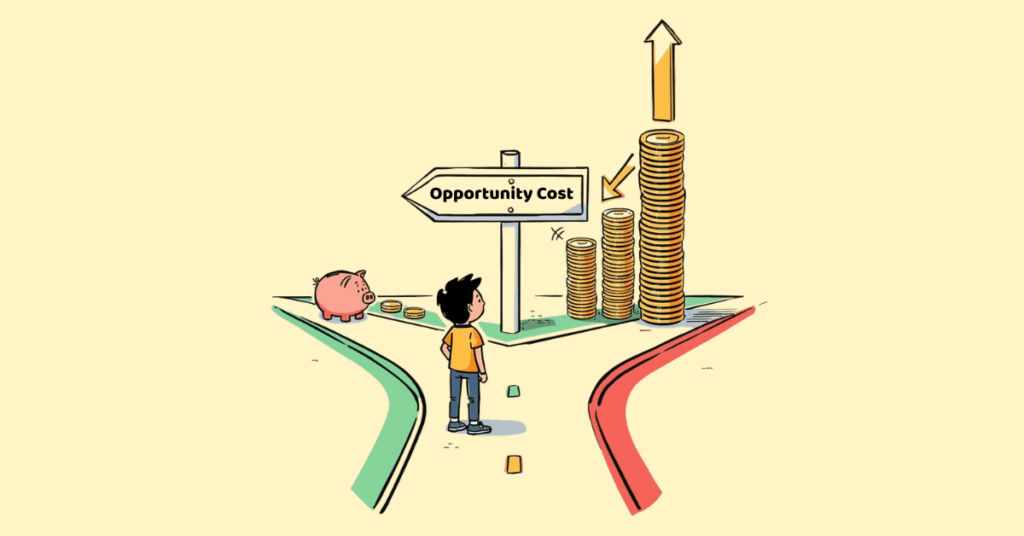
Everything You Should Know About The Opportunity Cost
Read Article →What Positive and Negative Cash Flow Mean in Practice
Positive means more money is coming in than going out during a given period. For most businesses, this is the goal, particularly at the operating level. Positive operating cash flow means the business generates enough cash from day-to-day operations to cover its costs without needing external funds.
Negative cash flow occurs when outflows exceed inflows. That situation is not automatically a crisis. A business expanding into new infrastructure may run cash deficits for several periods as it builds out capacity that will eventually generate returns. An early-stage business may spend several months consuming more than it earns. At the same time, it works toward a stable customer base.
The danger with negative cash flow is the speed at which it compounds. A business running a moderate monthly cash deficit can exhaust its reserves in a matter of weeks. Once operating cash runs out, the options narrow quickly: inject personal funds, seek emergency financing, cut costs aggressively, or begin missing payments.
Missing payments creates its own chain of problems. Suppliers tighten terms or require prepayment. Lenders flag the account. Credit scores drop. What started as a timing issue becomes a structural crisis.
Sustained negative cash flow without a clear path to reversal is one of the most reliable indicators that a business is in serious trouble, regardless of what the income statement says.
Why Cash Flow Problems Are a Leading Cause of Small Business Failure
Studies on small business failure consistently identify cash flow problems as a primary contributing factor. Estimates vary by source, but the pattern is well established: many businesses that close are, in theory, not unviable. They run out of money at the wrong moment.
There are several reasons cash flow problems are so common and so dangerous.
Growth can create cash pressure. When a business expands, it often needs to spend money before the revenue from that expansion arrives. A retailer opening a second location pays rent, staffing, and inventory costs for months before the new store turns cash-positive. A manufacturer landing a major contract may need to buy materials and pay workers long before the client pays the invoice. Growth that is not properly funded creates a cash gap that can overwhelm an otherwise healthy operation.
Customer payment terms create timing mismatches. In many industries, it is standard practice for clients to pay 30, 60, or even 90 days after receiving goods or services. The business that delivers those goods or services still has to meet its own obligations on schedule. The longer the payment cycle, the larger the gap between when cash leaves and when it returns.
Seasonal businesses face concentrated pressure. A business whose revenue is concentrated in certain months still has expenses spread across all twelve months. Managing cash during the slow season requires either strong reserves, access to credit, or deliberate planning of spending timing.
Overhead grows with scale. As businesses add staff, space, and systems, their fixed costs rise. If revenue growth slows or a major client delays payment, the higher overhead creates a larger shortfall than it would have at an earlier stage of the business.
None of these situations indicates a bad business. They indicate a business that needs to understand and manage its cash flow proactively rather than reactively.
How to Read a Cash Flow Statement and What It Shows You
A cash flow statement is a structured financial report that tracks cash inflows and outflows over a defined period, such as a month, quarter, or year. Three financial reports form the foundation of business accounting: the income statement, the balance sheet, and the cash flow statement. Each one is built to answer a specific question that the other two cannot, which is why reviewing only one of them leaves gaps in the picture.
A basic cash flow report is organized into the three sections described earlier: operating, investing, and financing. Each section lists the relevant sources and uses of cash, and the sections are totaled to show the net change in cash for the period.
At the bottom of the statement, you see the ending cash balance. That figure shows how much cash the business held at the end of the period. Comparing it to the opening balance shows whether the business gained or lost cash during that period.
What makes the cash flow statement more useful than the income statement for day-to-day survival decisions is that it strips out accounting adjustments. Depreciation, amortization, and accrual-based revenue recognition do not appear as cash movements. The cash flow report shows only what actually moved.
A business owner who reviews a cash flow report regularly can spot developing problems before they reach a critical point. Shrinking operating cash flow over several consecutive months, for example, signals that the business is consuming more than it is generating, even if the income statement still shows profit.
The cash flow statement is not a tool reserved for accountants. Any business owner can learn to read one, and doing so regularly is one of the most practical financial habits a small business operator can build.
Practical Signals That a Business Is Heading Toward a Cash Flow Problem
A cash flow crisis rarely arrives without warning. The signals are usually present weeks or months before the situation becomes acute. The problem is that many business owners do not recognize them until the pressure is undeniable.
Receivables are growing faster than revenue. If the total amount customers owe you keeps rising relative to your sales volume, it means clients are taking longer to pay. The money is still expected, but it is not available when the business needs it.
You are regularly using a line of credit to cover routine expenses. A line of credit is useful for managing short-term timing gaps. Using it consistently to pay standard monthly bills, such as payroll or rent, signals that operating cash flow is insufficient to cover normal operations.
Vendor payments are getting stretched. When a business starts paying suppliers late to preserve cash for more urgent obligations, it is a signal that cash is being managed by triage rather than by plan. Vendors notice, and the consequences eventually include tighter terms or the loss of supplier relationships.
Tax obligations are falling behind. Payroll taxes, sales taxes, and estimated income taxes all have firm deadlines. When a business begins missing or delaying these payments, it typically means other cash demands are being prioritized. The penalties and interest that accumulate on tax debt compound the problem quickly.
Owner draws have stopped. When an owner stops taking any compensation from the business to keep it liquid, that is a direct signal that the business cannot generate enough cash to cover its full obligations. It is a short-term solution that often masks the seriousness of the underlying situation.
The business cannot take on new work without a cash infusion. If accepting a new order or client requires taking on debt or waiting for another client to pay first, the business is operating with no cash buffer. Any disruption, including a client paying late, a cost overrun, or equipment failure, can create a crisis.
Recognizing these signals early gives a business time to respond with intention. That might mean tightening payment terms, reducing expenses, adjusting pricing, or restructuring the timing of obligations. The worst outcomes almost always involve situations where the warning signs were visible but went unaddressed.
The Relationship Between Cash Flow and Business Decisions
Understanding cash flow changes the way you make operating decisions, not just financial ones.
Pricing decisions affect cash flow timing. A discount that accelerates payment from a slow-paying client may be worth more in cash flow terms than the full invoice amount collected 90 days later. The business collects less, but it collects sooner, and that timing difference can matter enormously.
Hiring decisions affect cash flow immediately. A new employee generates payroll obligations the day they start. The revenue benefit from that hire may take months to materialize. A business that does not account for this gap can create cash pressure through a hiring decision that looks logical on paper.
Inventory decisions carry direct cash flow consequences. Stock too much product, and cash sits idle in goods that have not yet been converted to revenue. Stock is too low, and sales are missed entirely. Getting that balance right means knowing, with some precision, how much working capital the business can commit to physical stock at any point without creating a shortage elsewhere.
Payment terms with clients are a direct lever on cash flow. Requiring deposits, shortening payment windows, or offering small early-payment discounts all accelerate inflows. Each of those levers has trade-offs, but they are real tools available to any business trying to improve its cash position.
The point is that cash flow is not a passive reporting function. It is an active outcome shaped by decisions made across the entire business. This owner understands that connection makes better decisions at every level, not just in accounting.
Final Thoughts: Profit Is the Goal, Cash Flow Is the Lifeline
A business that shows profit but ignores cash flow is like a person who earns a good salary but cannot pay rent because every paycheck is spent before it clears. The numbers look right from a distance. The daily reality is something different.
Cash flow is not a topic reserved for businesses in trouble. It is a discipline that every small business owner benefits from building into their routine. Reading the cash flow report monthly, tracking receivables, watching the trend in operating cash generation over time — these habits take less effort than most owners expect, and they surface problems while solutions are still available.
The gap between a profitable business and a solvent one is often just this: the profitable business understands its numbers. The solvent business understands its cash. The businesses that last tend to manage both.
Watch It Instead
The Money Nudge — YouTube Channel
Prefer watching over reading? Every topic on this blog also comes to life as an animated video on our YouTube channel — where we make money talk even more simply.
Visit Our Channel