Walk into the investing world for the first time, and the sheer number of choices hits you like a wall. Thousands of individual stocks, hundreds of mutual funds, competing strategies, and no shortage of people telling you that the wrong pick could cost you everything. Most beginners freeze at this point. They open a brokerage account, stare at the screen, and close it again without doing anything. The index fund was built precisely for this moment.
Understanding what an index fund is and why it has become the most widely recommended starting point for first-time investors can cut through all of that noise. This article explains the concept from the ground up, shows how it works, and provides the context you need to understand why experts keep returning to it when they talk about investing for beginners. No prior investing experience required.
Prefer to watch instead of read?
Subscribe to The Money Nudge on YouTube for plain-English videos on money, investing, and economic topics.
Table of Contents
What Is a Market Index? Start Here Before Anything Else
Before getting into fund mechanics, it helps to know what a market index actually is. The word “index” in investing does not mean anything exotic. A market index is simply a list of companies grouped together to represent a portion of the financial market.
Think of it like a scorecard. A single index can follow anywhere from a handful of companies to several thousand at once, rather than just one. That combined number rises or falls based on how all those companies perform together. The index itself cannot be bought directly. It is a measurement tool, not an investment product.
The most widely cited example is the S&P 500. It is a list of approximately 500 large companies based in the United States, chosen because they represent a broad cross-section of the American economy. Technology companies, healthcare providers, consumer brands, energy companies, and financial institutions: all of them appear on this list. When people say “the market went up today,” they often mean the S&P 500 moved higher.
Understanding the stock market is the foundation that makes everything else in investing click. Once you know what the market is and how it is measured, this next concept becomes much easier to grasp.

How Does the Stock Market Actually Work and What Is a Stock
Read Article →What Is an Index Fund, Explained in Plain Language
An index fund takes a specific market index as its template and purchases every component on that list. Instead of picking individual companies, it buys a small piece of every company on the list it tracks.
Here is a plain-language version of how that works. Suppose the S&P 500 contains 500 companies. A fund tracking that index will hold shares in all 500 of those companies, weighted roughly according to each company’s size. A giant company like Apple takes up a larger slice of the fund than a smaller company on the list. When all those companies rise in value, the fund rises. When they fall, the fund falls with them.
Matching the market is the entire objective here, not outpacing it. That distinction turns out to be one of the most important ideas in all of personal finance. A fund that simply keeps pace with the market, year after year, ends up outperforming the vast majority of alternatives investments. More on that shortly.
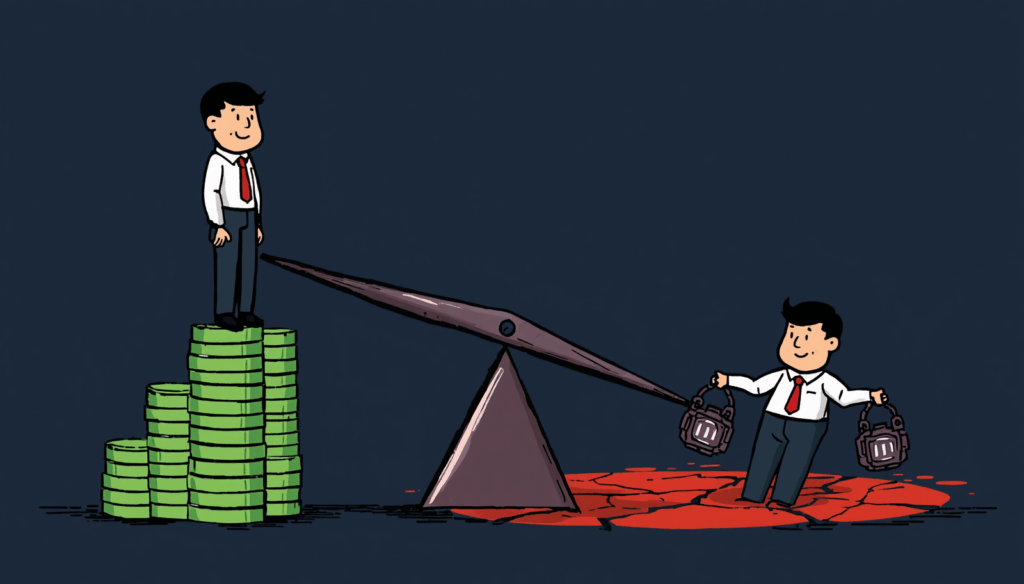
Understanding Your Net Worth Will Be The Game Changer.
Read Article →Index Fund Explained: The Mechanism Behind the Strategy
How index funds work comes down to a concept called passive investing. The fund does not employ a team of analysts studying company earnings reports and debating which stocks to buy. Instead, it follows a fixed set of rules: buy everything on the index, hold it, and rebalance only when the index itself changes.
This is different from most traditional investment funds, which are actively managed. An actively managed fund employs professional portfolio managers whose job is to research the market, make predictions, and select the stocks they believe will outperform. Trading in and out of positions is their primary tool, all in pursuit of outpacing the broader market.
A passive approach takes the opposite position. It accepts that no one consistently knows which companies will outperform, so it holds all of them instead. This simplicity is not laziness. It is a deliberate strategy backed by decades of financial research. The logic is that if you own a piece of everything, you will always participate in the gains of the winners, even if you never knew in advance which ones those would be.
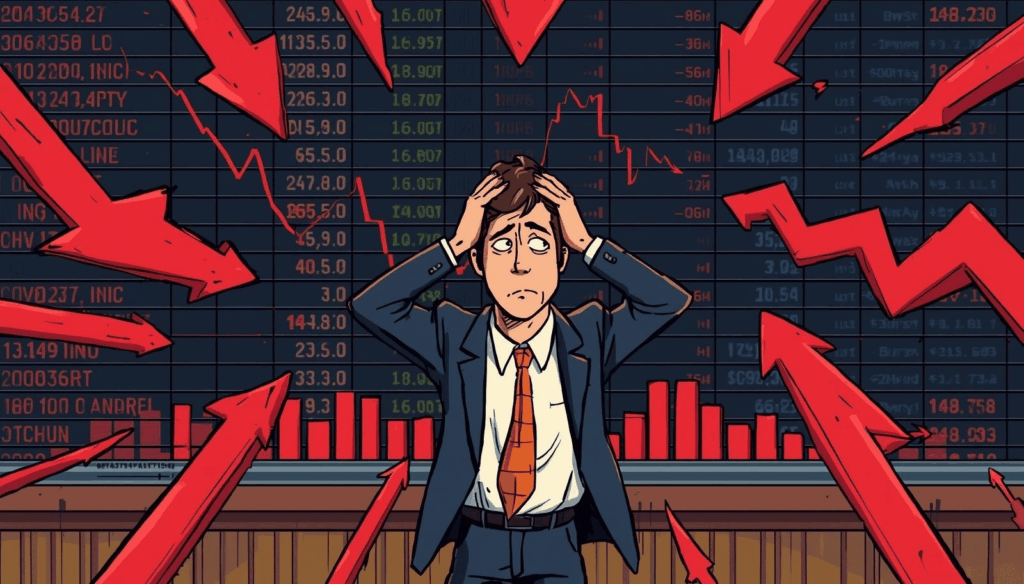
The 1987 Black Monday Was Marked in The Stock Market History
Find Out Why…
Read Article →Index Fund vs Mutual Fund: Understanding the Key Difference
The phrase index fund vs mutual fund creates confusion for a lot of beginners, because this type of fund is actually a category within mutual funds. The two terms are not opposites. They sit in different categories.
A mutual fund is a broad category that describes any investment vehicle where investors contribute capital together, and the combined pool goes toward purchasing a collection of assets. Some mutual funds are actively managed, meaning professionals pick what to buy and sell. Others are passively managed, meaning they track an index automatically.
A passively managed mutual fund is the passive version of that category. The distinction that matters for beginners is this: human expertise, ongoing research, and frequent trading all drive the cost of active management higher. The passive version requires almost no active decision-making and costs far less to run. That cost difference has enormous long-term consequences, and this article returns to that point in more detail ahead.

Did You Know That The DOT-COM Bubble Impacted The Entire Stock Market?
This Article Will Explain Everything You Need To Know About The DOT-COM Bubble.
Read Article →Index Fund vs ETF: Two Formats, Same Core Idea
Within the world of passive investing, there is one more distinction worth understanding: two formats exist for this type of fund, the index mutual fund and the index ETF, and they behave differently in practice.
ETF stands for Exchange-Traded Fund. Both an index mutual fund and an index ETF can track the exact same index, say the S&P 500, and both will produce nearly identical results over time. What separates them is the purchasing mechanism each one uses.
An index mutual fund is purchased at the end of each trading day at a single price, directly from the fund company. An index ETF trades on a stock exchange throughout the day, just like an individual stock, meaning its price fluctuates moment to moment.
For most beginners, this distinction is relatively minor. Both formats give you broad diversification, low costs, and exposure to the index they track. The practical choice often comes down to which your brokerage account supports and what minimum investment amounts apply. The underlying concept, passive investing through an index, is identical in both cases.
Why Most Actively Managed Funds Fail to Beat the Index
This is one of the most counterintuitive facts in all of personal finance, and it deserves its own section. Professional fund managers, armed with expensive research tools, large teams, and decades of experience, fail to consistently outperform a simple index fund over long periods of time.
Study after study has tracked this pattern. The SPIVA report, published by S&P Global, regularly measures the performance of actively managed funds against their benchmark index. Year after year, across nearly every category and time horizon measured, the majority of actively managed funds underperform the index they are supposed to beat. Over 15 or 20 years, the gap becomes even more dramatic. The longer the time period, the worse actively managed funds tend to look by comparison.
There are several reasons for this. First, predicting which individual stocks will outperform is genuinely difficult, even for professionals. The market processes information from millions of participants simultaneously, and beating it consistently requires being right when virtually everyone else is wrong. Second, the costs of active management eat into returns. Every trade, every analyst salary, every research subscription comes out of the fund’s performance before it ever reaches the investor. Passive funds sidestep most of these costs entirely.
This does not mean that no actively managed fund ever beats an index. Some do, in some years, and a handful have impressive longer-term records. The problem is that identifying them in advance is almost impossible. Most investors who try to pick a winning active fund end up picking one that underperforms instead.
What Diversification Means and Why It Matters
The word diversification comes up constantly in investing conversations. For beginners, it sometimes sounds like jargon without practical meaning. In the context of index funds, it has a very clear definition.
Diversification means spreading your investment across many different assets so that no single loss can destroy your portfolio. When you own shares in one company, your entire investment rises or falls based on what happens to that one business. A product recall, a bad earnings report, a leadership scandal: any of these can send that single stock dropping sharply.
When you own a fund that holds 500 companies, a single company collapsing barely registers in your portfolio. If one of those 500 companies loses half its value, and the other 499 hold steady, your overall investment barely moves. You are protected not because you predicted the collapse, but because your money was spread across so many companies that no single failure could hurt you badly.
This built-in diversification is one of the main reasons the index funds for beginners conversation keeps returning to this particular vehicle. A beginner does not need to evaluate hundreds of individual companies. A single fund purchase delivers exposure to all of them at once.

Starting an Emergency Fund When You Have Little or Nothing Saved.
Read Article →What Expense Ratios Are and Why Low Fees Change Everything
Every investment fund charges a fee for managing your money. That fee is called the expense ratio, and it is expressed as a percentage of your total investment each year. At 1%, that comes to one dollar in fees for every hundred dollars you hold, charged annually.
That sounds small, but over long periods it compounds in the wrong direction. Consider two investors who each put $10,000 into a fund earning 8% annually. One investor’s fund charges 1% per year. The other charges 0.05%, a figure typical of low-cost passive funds. After 30 years, the investor in the lower-cost fund has tens of thousands of dollars more, despite starting with the same amount and earning the same gross return. The fee difference, compounded annually over decades, becomes enormous.
Passive funds consistently carry some of the lowest expense ratios available because they require so little active management. Many popular options charge less than 0.10% per year. Some charge even less. Actively managed funds, by contrast, often charge 0.50% to 1.5% or more. That gap in cost becomes one of the most powerful arguments for passive investing over long horizons.
Why Index Funds Pair So Well with Long-Term Investing
Index funds work best when paired with time and consistency. A single purchase sitting in the market for one month tells you very little about how the strategy performs. The real power emerges over years and decades.
This is where compound interest becomes the engine behind wealth building. When the fund grows and you reinvest the returns, those returns begin generating their own returns. Over long periods, this compounding effect transforms modest, consistent contributions into substantial sums. The fund provides broad market exposure. Time and reinvestment do the rest.
The behavioral advantage of this approach reinforces the point. Because the strategy requires no ongoing decisions, no picking stocks, no timing the market, no switching funds, investors are less likely to make emotionally driven mistakes. Selling during a downturn and missing the recovery is one of the most common and costly errors in investing. Staying invested through that volatility is where the full long-term return gets captured.

What Is Compound Interest and Why Is It the Most Powerful Force in Personal Finance
Read Article →Index Funds and Building Wealth Slowly Over Time
The phrase “building wealth slowly” sounds like a limitation. In practice, it describes one of the most reliable wealth-building mechanisms available to ordinary people.
Many investors enter the market hoping to find a shortcut: a single stock that doubles, a hot sector that takes off, or a strategy that generates dramatic short-term returns. The search for shortcuts often ends in losses, frustration, or both. The straightforward path, steady contributions to a diversified, low-cost fund held consistently over a long period, produces results that most of those shortcuts never match.
This is not a theory invented to make patience sound exciting. It reflects decades of real market data. The American stock market has experienced wars, recessions, crashes, pandemics, and political upheaval, and has recovered from all of them over time. Investors who held broad market positions through those periods and kept contributing came out ahead. Investors who tried to time their exits and re-entries usually did not.
An index fund fits naturally into a long-term financial plan because it removes the temptation to make constant decisions. You buy it, you hold it, you add to it on a consistent schedule, and you let time do the heavy lifting.
What Index Funds Cannot Do: Being Honest About the Risks
No honest explanation of index funds for beginners skips this part. Passive market funds carry real risk, and every beginner deserves to understand what that looks like before investing a single dollar.
This type of fund does not protect you from market downturns. When the market falls, the fund falls with it. In 2008, the S&P 500 lost roughly 38% of its value in a single year. In early 2020, it dropped about 34% in the span of weeks. These declines are severe and feel alarming in real time. A fund tracking the S&P 500 would have experienced those same losses.
The historical record shows that the market has recovered from every major downturn in its history and gone on to reach new highs. But that recovery takes time, and there is no guarantee that every specific downturn will follow the same pattern. No one can promise when a recovery will arrive or how long it will take.
These funds also do not deliver stable, predictable returns each year. Annual performance varies widely. Some years produce strong gains. Others produce losses. Market return averages commonly cited in financial discussions represent multi-decade aggregates adjusted for inflation, not a reliable single-year figure.
Additionally, a fund tied to a single country’s market carries concentration risk in that geography. An S&P 500 index fund tracks American companies. If the US economy underperforms global markets for an extended period, a fund concentrated there reflects that underperformance. None of these risks mean passive index investing is a poor approach. They mean it involves real exposure to real market conditions, and anyone entering the market should do so with that in mind.
How Index Funds Connect to the Bigger Picture of Personal Finance
This investment does not exist in isolation. It is one tool within a broader approach to building financial stability. Seeing it in relation to the other steps of a financial plan is what makes the concept fully useful.
Investing before building an emergency fund, for example, creates a problem. If an unexpected expense forces you to sell during a market downturn, you lock in a loss at the worst possible moment. The sequence of personal finance steps matters. A solid financial foundation, stable income, an emergency fund, and manageable debt, creates the conditions where long-term investing can work as intended.
The fund is also not a substitute for other components of a financial plan. Insurance, estate planning, retirement accounts, and tax strategy all play roles that no single investment vehicle can fill on its own. What passive investing does exceptionally well is provide broad, low-cost exposure to market growth over time, inside whatever account structure makes sense for each person’s situation.
Quick Reference: Index Fund Key Facts
| Concept | Plain-Language Summary |
|---|---|
| What it is | A fund that tracks a market index by holding all its components |
| How it works | Buys a small piece of every company in the index automatically |
| Main benefit | Built-in diversification at very low cost |
| Biggest risk | Falls with the market during downturns |
| Expense ratio | Typically under 0.10% for broad market passive funds |
| Index fund vs ETF | Same idea, different trading format; both track an index |
| Time horizon | Works best over years and decades, not months |
| What it cannot do | Protect against market losses or guarantee any specific return |
What Makes Index Funds the Starting Point for So Many Beginners
Thousands of people sit down each year to research investing for the first time and arrive at the same recommendation: start with a broad market index fund. That consistency is not accidental. It reflects a genuine alignment between what this vehicle offers and what a first-time investor actually needs.
A beginner needs simplicity. Passive investing requires no ongoing decisions about which companies to buy or sell. A beginner needs low costs. These funds charge a fraction of what actively managed alternatives charge. A beginner needs diversification. A single purchase delivers exposure to hundreds of companies at once. A beginner needs a vehicle that does not require expert timing or prediction. This approach was designed exactly for that.
The index fund explained in this article is not a complicated vehicle dressed up in simple language. It genuinely is simple by design. Its creators built it to remove complexity, not hide it. That simplicity is what makes it effective, and it is what makes it the starting point so many financial educators return to when someone asks where to begin.
Understanding the concept is the first step. What comes next, choosing an account type, determining how much to invest, and building a consistent habit, involves decisions each person works through based on their own circumstances and financial goals.
Final Thoughts: The Idea Behind the Investment
Every investment vehicle exists to solve a problem. The problem an index fund solves is this: most individual investors cannot reliably pick winning stocks, and most professional managers cannot either. Rather than pretending that problem does not exist, passive investing removes it from the equation entirely.
By holding everything in a given market, the fund ensures that investors always participate in the gains of the best-performing companies, even without knowing in advance which ones those will be. By keeping costs low, more of the market’s return stays with the investor instead of paying for active management that rarely justifies its expense. By requiring no ongoing decisions, it removes the behavioral pitfalls that cause many investors to underperform the very funds they invest in.
That is the full picture of what is an index fund. Not a miracle, not a guarantee, and not without risk. But a straightforward, well-understood, widely-studied investment vehicle with a long track record of delivering broad market returns at a fraction of the cost of the alternatives.
For someone stepping into investing for the first time, that combination is worth understanding clearly before taking any next step.
Watch It Instead
The Money Nudge — YouTube Channel
Prefer watching over reading? Every topic on this blog also comes to life as an animated video on our YouTube channel — where we make money talk even more simply.
Visit Our Channel