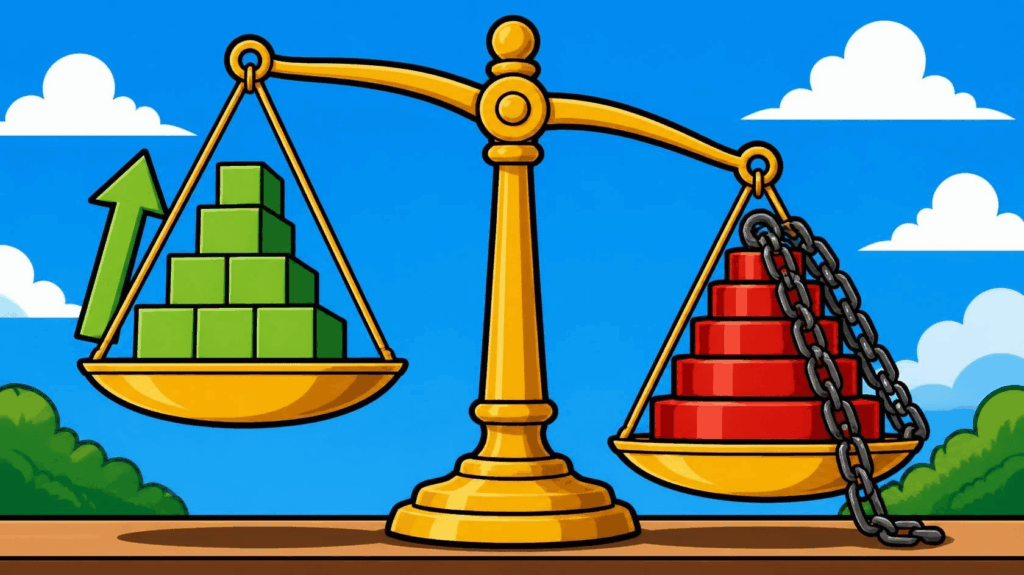
Illustrative Disclaimer: Any names, characters, or personal scenarios mentioned in this article are entirely fictional and created solely for educational purposes. They do not represent real individuals, events, or situations. Any resemblance to actual persons, living or deceased, is purely coincidental.
Jordan and Taylor live two blocks apart. They drive similar cars, own homes of nearly the same value, and earn comparable salaries at similar jobs. From the outside, their financial lives look like mirror images of each other, yet one of them is quietly building wealth every year while the other is quietly sinking deeper into debt. The difference has nothing to do with income. It comes down to a distinction most people never learn to see clearly: the difference between assets and liabilities.
Jordan spends carefully and directs money toward things that grow in value or generate income over time. Taylor spends a similar amount each month, but nearly all of it goes toward things that lose value immediately after purchase or carry ongoing costs with nothing to show for them later. Ten years from now, Jordan will likely have a financial cushion that keeps growing without much extra effort. Taylor will likely still be working just as hard for the same paycheck, with little extra to show for it. The gap between them will not come from a lucky break or a higher salary. It will come from every small choice about what to own and what to owe.
This single distinction, assets and liabilities, explains far more than most people realize. It explains why some people earning modest salaries build significant wealth over a lifetime, while others earning six figures live paycheck to paycheck. It explains why a home or a car can either strengthen or quietly weaken a financial position. Once this idea becomes clear, everyday spending decisions start to look different. This article breaks down what assets and liabilities actually are, why the balance between them matters so much, and how shifting that balance is the real engine of wealth building.
Prefer to watch instead of read?
Subscribe to The Money Nudge on YouTube for plain-English videos on money, investing, and economic topics.
Table of Contents
What Is an Asset? A Plain-Language Definition
An asset is anything that puts money in your pocket or grows in value over time. That is the simplest way to think about it, without diving into technical accounting rules. Money grows quietly inside a savings account through interest. That growth alone qualifies the account as an asset. A rental property that generates monthly income is an asset. Shares in a company that pays dividends or whose price rises are an asset. Even a small business that produces profit each month counts as an asset, because it works to increase your financial position rather than drain it. Keeping this test in mind makes the broader pattern of assets and liabilities much easier to recognize.
The defining feature of an asset has nothing to do with its label or how expensive it looks. The defining feature is what it does for your finances over time. A collection of quality tools that a contractor uses to complete paying jobs is an asset, because those tools generate income. A modest index fund that grows steadily every year is an asset, even if the balance looks unglamorous on a screen. The size or appearance of an asset does not matter nearly as much as its direction. If something consistently adds value or income to your life, it earns the label.
Assets generally show up in one of two forms. Some assets generate regular income today, such as rental payments, dividends, or interest. Other assets grow quietly in value without producing regular cash, such as land or a stock that reinvests its earnings instead of paying them out. Both forms count as real assets because both increase the overall financial position over time. The common thread running through every example is simple. Money flows toward the owner instead of away from them, whether that happens today in the form of a check or years from now in the form of accumulated growth.
How To Break Out Of The Paycheck To Paycheck Trap
Read Article →What Is a Liability? The Other Half of the Equation
A liability is the opposite. It is anything that takes money out of your pocket or requires ongoing payments without generating income in return. A credit card balance carrying interest each month is a liability. A car loan on a vehicle that loses value the moment you drive it off the lot is a liability. Even a mortgage, tied to a home, functions as a liability for as long as payments, interest, taxes, and maintenance drain your bank account faster than the property builds equity. The test is simple. Either money flows out of your pocket because of it, or money flows back into your pocket because of it. A liability always falls into the first category.
Liabilities show up everywhere in daily life, often disguised as normal expenses. A buy now, pay later plan on a wardrobe upgrade is a liability. A stack of subscriptions that quietly renew every month, even ones rarely used, counts as a liability. A personal loan used for a vacation becomes a liability, with nothing left to show for it once the trip ends. None of these purchases is inherently wrong. People deserve vacations, clothing, and entertainment. The point is not to eliminate every liability from life. The point is to recognize clearly which category a purchase falls into before committing to it.
Not every liability comes from a poor decision. Some liabilities are simply part of everyday life, like a phone bill or a basic auto loan needed to get to work. The goal is not to eliminate liabilities, since that is neither realistic nor necessary for most people. The goal is awareness. Once someone can label a monthly payment honestly as either a liability that supports daily life or one that quietly drains wealth for no lasting benefit, the pattern of assets and liabilities becomes obvious rather than invisible, and better choices tend to follow.
Buy Now, Pay Later (BNPL): What It Really Costs You
Read Article →Assets vs Liabilities at a Glance
| Category | Common Examples | Why It Fits |
|---|---|---|
| Asset | A savings account, an index fund, a rental property, dividend-paying stocks, a profitable small business | It produces income or grows in value over time |
| Liability | Credit card debt, most car loans, buy now pay later plans, unused subscriptions, high-interest personal loans | It requires ongoing payments without generating income |
The Difference Between Assets and Liabilities: The Real Definition of Wealth
Once the definitions are clear, one insight ties everything together. Assets put money in your pocket. Liabilities take money out of your pocket. This is the entire foundation of the difference between assets and liabilities, and it explains far more about financial outcomes than income ever could. Identical paychecks can lead two people toward two completely different financial futures. The split occurs because one channel cash flows into assets, while the other channels it into liabilities.
Consider a simple comparison. One person earns $80,000 a year and spends heavily on liabilities: a new car every three years, a stretched mortgage, and revolving credit card debt. Another person earns the same $80,000 and channels a portion of every paycheck into assets: a retirement account, a taxable investment account, and a small rental property. Ten years later, the first person still earns close to $80,000, after modest raises, and still owes money on nearly everything they own. The second person earns a similar salary, but now also collects rental income, dividends, and investment growth on top of it. Both started with identical paychecks, yet they ended up in entirely different financial positions.
Most people never learn to sort their financial choices this way. Financial guidance often focuses on income, on saving a certain percentage, or on cutting small expenses like coffee runs. All of that carries value, yet it misses the deeper mechanism. The real transformation happens when someone starts evaluating every dollar and every purchase through one simple filter: whether it puts money into their pocket over time, or takes money out of it. That single filter, applied consistently, is what separates people who build lasting wealth from people who earn a good living.
When an “Asset” Actually Behaves Like a Liability
A car offers the clearest example of this trap. Most people consider their car one of their biggest assets, mainly because it has significant value. In reality, a car almost always behaves like a liability. The moment a new car leaves the dealership lot, it loses a meaningful percentage of its value. From that point forward, it continues to lose value each year while also requiring insurance payments, fuel, maintenance, and, often, a loan payment. Money flows out constantly, and none of it flows back in. A car provides transportation, convenience, and sometimes genuine enjoyment, all of which carry real worth. It does not function as a financial asset as many people assume.
A home follows a more complicated version of the same pattern. Many financial educators call a primary home the biggest liability disguised as an asset, and the logic holds up. A home does not generate income for most owners. Instead, it requires mortgage payments, property taxes, insurance, maintenance, and repairs, all of which are debited from a bank account every month. A home can still build equity over time as the mortgage balance shrinks and, in many markets, property values rise. That equity carries real value. A primary home can behave like a liability on a monthly cash flow basis and like an asset over the long term. Both truths exist at the same time.
The 2008 Financial Crisis: How a Housing Bubble Brought Down the Global Economy
Read Article →Why Some Liabilities Build Wealth While Others Drain It
Not every liability carries the same weight, and this is where the distinction between good debt and bad debt becomes useful. Good debt generally refers to borrowed money that helps build an asset, increases income, or expands earning potential over time. A loan that funds a rental property producing positive monthly cash flow fits this category. A small business loan that funds equipment capable of generating more revenue than the loan costs fits as well. Even certain forms of educational debt can fall into this category when the resulting career path realistically increases income by more than the cost of the debt.
Bad debt works in the opposite direction. It finances things that lose value, generate no income, and leave nothing behind once the payments end. Everyday credit card balances, high-interest personal loans for vacations, and financing plans for depreciating electronics all fall into this category. The relevant question is not whether debt feels stressful or whether the interest rate runs high. The relevant question is whether the debt eventually pays for itself through added income or added value. Good debt tends to answer yes. Bad debt almost always answers no.
This distinction does not mean debt is something to pursue aggressively. Debt still carries risk, interest, and the possibility that projections do not play out as expected. A rental property can sit vacant. A business can underperform. The good debt versus bad debt framework is simply a way to categorize how a liability behaves, not a suggestion that any particular debt is the right choice for any particular person. At its core, the framework is just the assets-and-liabilities test applied to borrowed funds. The same core question still applies to every dollar borrowed. It comes down to whether the debt increases assets and income or whether it simply finances consumption.

Why Every Personal Budget You Have Tried Has Failed (And What to Do Instead)
Read Article →How Assets and Liabilities Shape Your Net Worth Over Time
Every asset and every liability eventually rolls into one single number: net worth. Net worth is simply the total value of everything owned minus the total value of everything owed. Assets increase that number. Liabilities decrease it. A person can look wealthy from the outside, with a large house, a new car, and a closet full of nice clothes, and still carry a low or even negative net worth once liabilities outweigh assets. Meanwhile, a person who lives modestly but consistently directs money toward assets can quietly accumulate a net worth far larger than their visible lifestyle suggests.
Small shifts in what someone owns versus what they owe compound into something far larger over time. That force comes from the connection between assets, liabilities, and net worth. Every dollar invested in an asset has the potential to grow and generate more dollars later. Every dollar directed toward a liability disappears, or worse, it costs additional money through interest charges. Over the course of a year, the difference between these two paths looks small. Over ten or twenty years, the gap becomes enormous because assets tend to compound while liabilities accumulate. Two people who start with the same net worth can end up decades apart in financial security, purely because of where their money flows year after year.
Building Wealth by Shifting the Balance
Building wealth does not require a dramatic event, a windfall, or a rare investment opportunity. It requires a consistent shift in direction, moving money from liabilities to assets, one decision at a time. Every payment redirected from a depreciating car loan into an index fund is a small shift. Every subscription canceled and redirected into a retirement account is a small shift. Each one adjusts the balance of assets and liabilities further in the right direction. None of these moves feels significant in the moment. The power comes from repetition and time.
This is where compound interest comes into play. Money placed into an asset does not just sit there. It grows, and the growth itself starts generating additional growth. A modest amount invested consistently over several decades can turn into a substantial sum, not because the original amount was large, but because time and compounding did the heavy lifting. Liabilities work against this same force. Interest on debt compounds, too, except it increases the amount owed rather than the amount owned. Redirecting money from liabilities to assets does not just stop the bleeding. It reverses the direction of the same compounding force, turning it into an advantage instead of a burden.
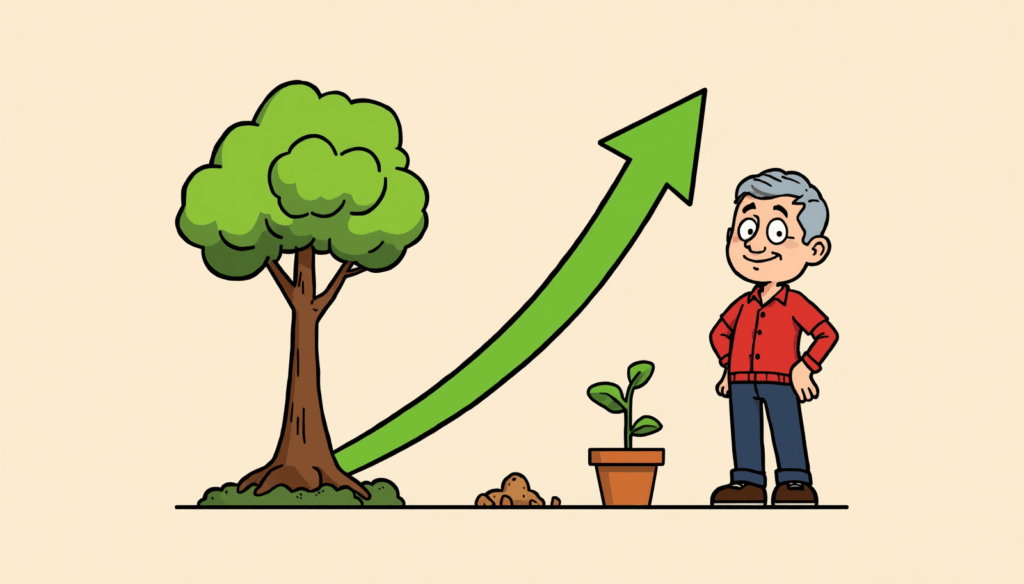
The Compound Interest Can Be The Reason You Are Not Being Able To Build a Net Worth.
Read Article →Why High Earners Still End Up Financially Fragile
People often treat income as the ultimate measure of financial success, yet income alone guarantees nothing. A household earning $250,000 a year can still live one missed paycheck away from serious trouble when nearly all of that income flows into liabilities. A large mortgage stretched to the edge of affordability, two leased luxury vehicles, private school tuition financed through loans, and revolving credit card balances can consume an enormous income without leaving anything behind. High earners often assume that a large paycheck automatically produces financial security. In reality, financial security comes from what remains after covering liabilities, not from the size of the paycheck itself. Income measures what comes in. Assets and liabilities measure what actually stays.
This pattern has a name in personal finance circles: lifestyle inflation. As income rises, spending on liabilities often rises right alongside it. A raise leads to a bigger house. A bonus leads to a nicer car. A promotion leads to more dining out and more subscriptions. None of these choices is wrong on its own, yet when every increase in income flows into a corresponding increase in liabilities, net worth stays flat no matter how much the paycheck grows. A high earner with heavy liabilities and few assets sits closer to financial fragility than a modest earner who consistently builds assets, even though the two might look completely different from the outside.
Looking at Everyday Purchases Through the Assets vs Liabilities Lens
The assets vs liabilities lens is most useful in everyday moments, not just in major financial decisions. Before a purchase, it helps to ask a simple internal question: Will the money come back over time, or will it keep leaving? A streaming subscription used every week provides real entertainment value, even though it still counts as a liability. A streaming subscription forgotten after the first month provides nothing but a recurring charge. The dollar amount might be identical. The financial impact is not.
The same lens applies to bigger purchases, too. A truck purchased to support a landscaping business that generates income functions differently from an identical truck purchased purely for status and comfort. A certification that leads to a higher-paying role differs from an expensive course that is never completed. Even furniture reveals the pattern. Quality furniture bought once and used for 20 years often costs less over time than cheap furniture replaced every 2 years, even when the cheap version looks like the better deal upfront. Running every purchase through this lens does not mean eliminating enjoyment or comfort. It simply means applying the same asset-and-liability thinking to ordinary purchases, turning an invisible trade-off into a conscious one.
The Long-Term Payoff: Assets, Liabilities, and Financial Security
Financial security rarely comes from a single decision. It comes from the cumulative effect of thousands of small decisions made consistently over the years, each adding to either assets or liabilities. A person who tilts that balance toward assets, even modestly, sees growing net worth and more open options. That same shift also builds a cushion against setbacks such as losing a job, facing a large medical expense, or having to cover an unplanned repair. A person who tilts that balance toward liabilities, even while appearing successful, tends to end up vulnerable to the same events, regardless of how much they earn. Assets and liabilities, honestly added up, tell the real story behind every net worth number.
This is also why net worth serves as a far more honest scoreboard than income alone. Two neighbors can drive the same car and live in homes of similar value, yet sit on completely different levels of financial security once every asset and every liability is factored in. Tracking net worth over time, even just once a year, reveals whether daily decisions are quietly building a financial cushion or quietly eroding one. It removes the guesswork and replaces it with an honest number that reflects the sum of every choice made about what to own and what to owe.
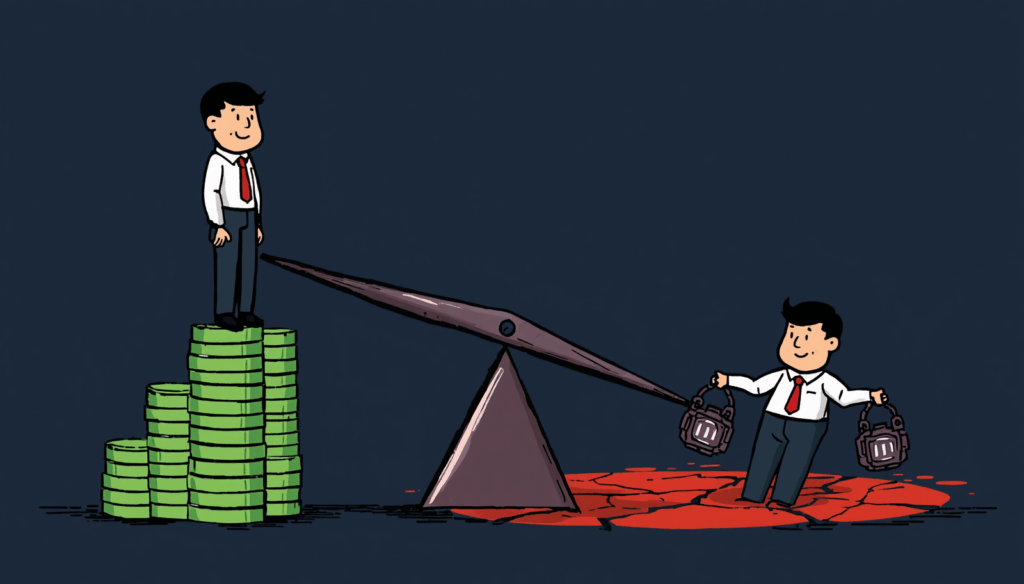
What Is Net Worth and Why Is It the Only Number That Truly Measures Your Financial Health
Read Article →Final Thoughts: The Choice Behind Every Choice
Return to Jordan and Taylor from the beginning. Their paychecks, their homes, and their cars all looked similar enough to fool a casual observer. Underneath that surface, one of them spent a decade quietly directing money toward assets, while the other spent the same decade quietly directing money toward liabilities. That single difference, repeated in small moments across ten years, produced two completely different financial futures. The distinction between assets and liabilities will not show up on a business card or a social media post. It shows up in a bank account, in a retirement fund, and in the quiet ability to handle whatever life brings next.
Understanding the difference between assets and liabilities does not require a finance degree, a high income, or a lucky break. It requires a willingness to look honestly at where money goes every month and to ask which category it falls into. That single shift in perspective, applied patiently over years, is what quietly separates two people who once looked the same.
Watch It Instead
The Money Nudge — YouTube Channel
Prefer watching over reading? Every topic on this blog also comes to life as an animated video on our YouTube channel — where we make money talk even more simply.
Visit Our Channel